
Complete Guide to Mica Paper Molding Machines
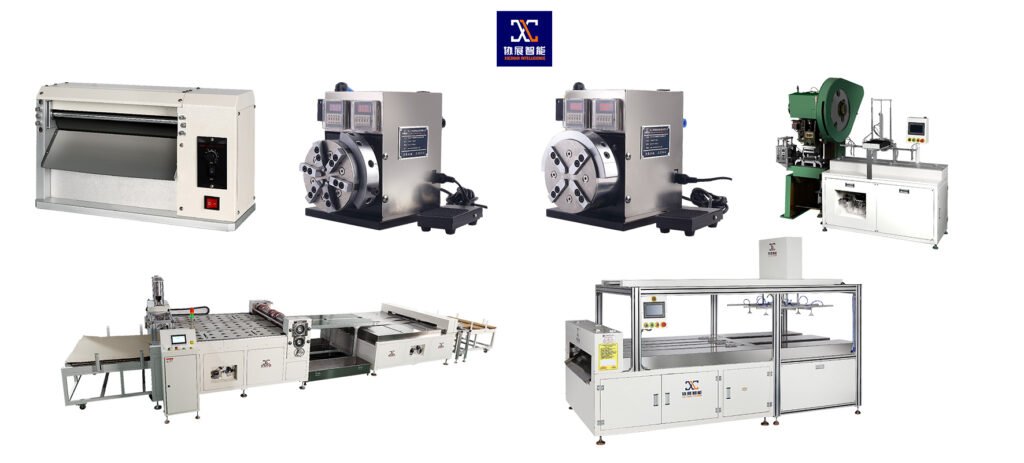
How Manufacturers Improve Mica Roll Forming Consistency in Heating Element Production
For manufacturers producing hair dryers, industrial heaters, and compact thermal appliances, one of the biggest production challenges is maintaining stable mica roll shaping without cracking, deformation, or dimensional inconsistency. A professional mica paper molding machine helps solve this problem by controlling forming pressure, shaping consistency, and material handling during continuous production. In modern heating element factories, stable mica forming has become increasingly important because even small structural deviations can affect heater assembly quality and long-term insulation reliability.
Many factories initially underestimate how sensitive mica paper behaves during forming operations. After working with heating element manufacturers for years, I’ve seen production lines lose efficiency simply because the shaping process relied too heavily on operator experience rather than controlled mechanical forming systems. This is exactly where dedicated mica molding equipment starts to create measurable production advantages.
Why More Factories Are Upgrading Mica Forming Equipment
Industry reports from appliance manufacturing associations show that production consistency and dimensional repeatability have become top priorities for heating element suppliers serving export-oriented appliance brands. Stable mica shaping directly affects assembly speed, insulation alignment, and product reliability during long-term thermal cycling.
What Is a Mica Paper Molding Machine?
A mica paper molding machine is specialized industrial equipment designed to shape, roll, and form flexible mica insulation materials into precise structures required for heating element production. These machines are commonly used for mica roll forming in hair dryers, compact heaters, electrical insulation assemblies, and temperature-resistant thermal products.
Unlike flat cutting equipment, mica molding equipment focuses on controlled shaping processes. Instead of only trimming dimensions, the machine must maintain material integrity during bending and forming. This becomes especially important because mica sheets are naturally brittle and can crack under unstable forming pressure.
Modern mica board shaping machines are typically designed around:
- Controlled forming pressure
- Stable motor-driven shaping systems
- Continuous material feeding
- Multi-size mica roll forming
- Consistent radius shaping accuracy
In real production environments, these systems help reduce manual handling errors while improving assembly consistency for heating element manufacturing.
Why Is Heat Resistant Mica Forming Difficult?
Many buyers assume mica shaping is relatively simple because mica paper itself appears lightweight and flexible. In practice, however, heat resistant mica forming is one of the more delicate processes in insulation component manufacturing.
The main challenge comes from balancing:
- Forming pressure
- Material thickness variation
- Shaping radius stability
- Production speed
- Material fracture resistance
If the shaping force is unstable, the mica sheet may develop hidden cracks that are difficult to detect during visual inspection but become problematic during long-term heater operation.
Factories producing heating components for export appliances usually pay close attention to this issue because insulation failure directly affects product durability and safety performance.
How Does a Modern Mica Board Shaping Machine Work?
Modern mica sheet panel forming equipment uses controlled motor-driven systems to shape mica paper into stable cylindrical or curved structures without damaging the insulation material.
One practical example is the XZ-J730D Mica Paper Molding Machine developed for hair dryer mica roll round processing. This compact industrial unit is designed specifically for continuous mica roll shaping applications used in heating element manufacturing.
The XZ-J730D features:
| Specification | Details |
|---|---|
| Equipment Model | XZ-J730D |
| Rated Voltage | 220VAC 50Hz |
| Rated Power | 200W |
| Motor Speed | 500rpm |
| Mica Thickness Range | 0.4–1mm |
| Mica Width Range | 10–300mm |
| Motor Type | High Performance Speed Regulating Motor |
Compared with manual forming methods, controlled motor-driven shaping improves radius consistency and reduces operator-dependent variation during continuous production.
You can explore more related equipment in our Mica Sheet & Mica Board Processing Machines category.
Production Reality Many Buyers Overlook
In many factories, mica forming problems do not appear immediately during shaping. The real issues often emerge later during heater assembly or thermal cycling tests. Stable forming consistency is usually more valuable than simply increasing shaping speed.
How to Choose the Right Mica Molding Equipment
When engineering managers evaluate mica molding equipment, the best approach is to begin with production requirements rather than equipment appearance or speed specifications alone.
The decision process usually involves several practical questions:
Step 1: Identify the Heater Structure
Different heating products require different mica roll dimensions, forming radii, and insulation structures. Hair dryer mica rolls typically require thinner materials and tighter shaping consistency compared with larger industrial heater assemblies.
Step 2: Evaluate Material Characteristics
Mica paper thickness, resin composition, and flexibility directly affect forming behavior. Machines designed for thin flexible mica may not perform well with denser insulation materials.
Step 3: Consider Production Volume
Manual forming methods may work for prototype production, but medium- and high-volume manufacturing usually requires stable automated shaping systems to maintain production consistency.
Step 4: Review Speed Control Stability
Consistent motor speed control is extremely important in mica sheet panel forming because unstable shaping speed increases deformation risk during continuous operation.
What Problems Do Factories Commonly Face During Mica Forming?
After discussing production issues with multiple heater manufacturers, several recurring forming problems appear consistently across different factories.
| Common Problem | Main Cause | Production Impact |
|---|---|---|
| Mica cracking | Unstable forming pressure | Reduced insulation reliability |
| Radius inconsistency | Manual shaping variation | Assembly difficulties |
| Material deformation | Improper speed control | Higher rejection rate |
| Production instability | Operator dependence | Lower batch consistency |
One interesting trend is that many factories initially blame mica material quality for shaping defects. However, after detailed production analysis, the actual problem often comes from unstable forming equipment or inconsistent handling methods.
Why Are More Heating Element Factories Moving Toward Specialized Forming Machines?
The shift toward dedicated mica molding equipment is happening for practical production reasons rather than simple equipment modernization.
Over the past several years, appliance manufacturers have increased requirements for:
- Assembly consistency
- Thermal durability
- Dimensional repeatability
- Production traceability
- Lower rejection rates
These changes are pushing heating element factories to reduce manual forming dependence and improve production stability through dedicated mica board shaping machines.
From my perspective, the biggest industry change is not simply automation itself. It is the growing recognition that insulation consistency directly affects final product reliability. Ten years ago, many factories treated mica forming as a secondary process. Today, experienced manufacturers increasingly treat it as a controlled engineering process.
How Experienced Manufacturers Evaluate Long-Term Equipment Value
Professional heater manufacturers rarely evaluate equipment based only on initial machine cost. Instead, they focus on long-term production stability.
This usually includes:
- Consistency over continuous production cycles
- Motor durability
- Material compatibility flexibility
- Maintenance simplicity
- Operator training difficulty
- Future production scalability
At Guangdong Xiezhan, project discussions with clients usually begin with the heater structure and production process rather than recommending a generic machine immediately. This approach helps manufacturers avoid equipment mismatch problems that often appear later during production expansion.
You can learn more about our manufacturing background and factory capabilities on the About Us page.
Some international project examples are also available in our Client Cooperation section.
Final Thoughts from a Production Engineering Perspective
A mica paper molding machine is not simply a shaping tool. In modern heating element manufacturing, it has become part of the broader production control system affecting insulation reliability, assembly consistency, labor efficiency, and long-term product stability.
As appliance manufacturers continue tightening quality standards, stable mica sheet panel forming will become increasingly important for factories supplying export markets and high-volume heating applications.
Machines such as the XZ-J730D demonstrate how compact specialized mica molding equipment can improve production consistency while reducing manual forming variation in real manufacturing environments.
If you are currently evaluating heat resistant mica forming equipment or planning to upgrade your heater production line, you can contact our engineering team through the Contact Us page for technical discussions and production recommendations.