
Semi-Automatic vs Fully Automatic Mica Processing Machines
Choosing the Right Automation Level for Mica Board Production
Most buyers asking about mica processing automation are not simply comparing machine prices. They are trying to answer a more practical question: “At what production stage does full automation actually make financial sense?” In real factory environments, the answer depends on labor stability, board consistency requirements, production scheduling pressure, and downstream assembly demands. A semi-automatic setup may outperform a poorly configured fully automatic line in some workshops. At the same time, many fast-growing manufacturers discover too late that limited automation becomes a bottleneck once export orders increase. The decision is rarely about “cheap versus expensive.” It is about matching automation level to production reality.
What Are Buyers Really Comparing When They Ask “Semi Auto vs Full Auto”?
Procurement teams rarely focus only on machine structure. The deeper concern is operational risk. A purchasing manager in India may worry about labor turnover. A Turkish manufacturer may focus on dimensional repeatability for export heating elements. A Middle Eastern buyer may prioritize simplified maintenance because local technical support is limited.
This is why experienced industrial buyers compare five practical areas first:
- Production consistency
- Operator dependency
- Maintenance complexity
- Expansion capacity
- Long-term production cost
From our experience as a mica processing machine manufacturer working with heating element factories, the biggest mistake buyers make is selecting equipment based only on current production volume. Mature manufacturers usually purchase according to their expected capacity 18–24 months later.
If your factory already runs two shifts during peak season, it is usually smarter to evaluate automation upgrade costs now rather than wait for labor shortages to slow deliveries later.
How Does Semi-Automatic Equipment Perform in Real Production?
Semi-automatic mica processing machines remain common in developing manufacturing regions for one simple reason: flexibility. Operators can quickly adjust feeding position, cutting dimensions, or stacking methods without major programming changes.
This setup works especially well for:
- Small and medium production runs
- Factories producing multiple mica board specifications
- Custom heating element projects
- Workshops with stable labor availability
- Companies entering the mica insulation market for the first time
However, semi-auto production has limitations that become obvious once order volume increases.
Where Semi-Automatic Lines Usually Struggle
In many factories, production inconsistency does not come from the machine itself. It comes from manual handling between processes. Slight feeding deviation can create cutting tolerance differences, especially when working with thin mica sheets below 1mm thickness.
Operators also become critical production variables. Skilled workers can maintain stable quality, while inexperienced workers may create high rejection rates during long production cycles.
Over time, labor-intensive production creates hidden costs:
- Higher training expenses
- Inconsistent daily output
- Material waste during shift changes
- Reduced scheduling predictability
- Quality fluctuation between operators
These issues become more serious for export-oriented factories where delivery timing and dimensional consistency directly affect customer relationships.
Why Are More Manufacturers Moving Toward Fully Automatic Mica Processing?
The shift toward automated mica board machine systems is happening for a structural reason, not a trend reason. Factories are under pressure from three directions simultaneously:
- Rising labor costs
- Higher precision requirements
- Shorter delivery expectations
Fully automatic systems reduce process interruption between feeding, cutting, trimming, and stacking. This improves not only speed, but also production rhythm.
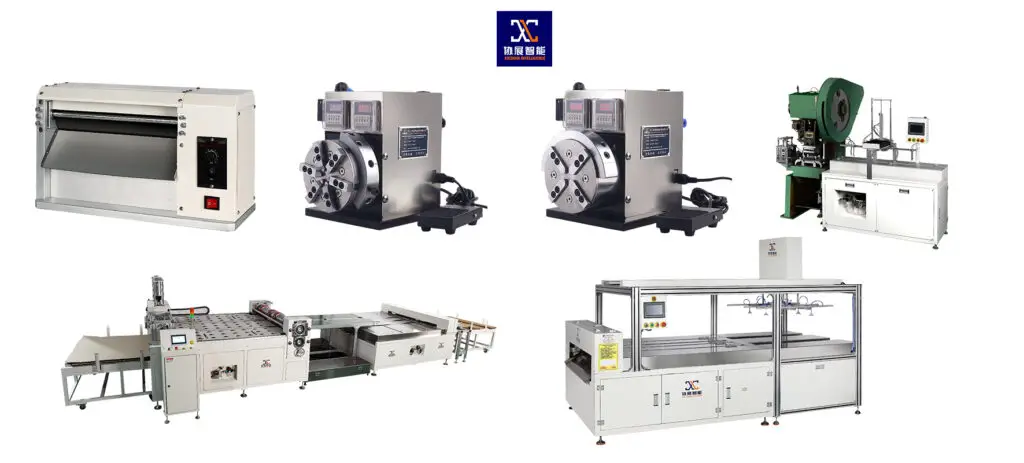
For example, the XZ-XB1300 Fully Automatic Mica Board Four Edge Trimming and Cutting Machine is designed for continuous processing with CNC adjustable cutting size and servo spindle control. In factories producing heating element insulation boards, this type of automation significantly reduces dimensional variation during large-volume orders.
The XZ-JB1212 Fully Automatic Mica Board Cutting Machine is another example where automatic feeding and CNC positioning help manufacturers maintain stable accuracy during repetitive production cycles.
You can review more equipment configurations here: Mica Sheet & Mica Board Processing Machines
| Comparison Area | Semi-Automatic | Fully Automatic | Best Fit | Buyer Consideration |
|---|---|---|---|---|
| Initial Investment | Lower | Higher | New factories | Cash flow planning |
| Labor Dependency | High | Low | Growing exporters | Long-term staffing stability |
| Production Stability | Operator dependent | Consistent | Mass production | Tolerance control |
| Changeover Flexibility | Fast | Moderate | Mixed product factories | SKU diversity |
| Future Expansion | Limited | Strong | Large-scale suppliers | Automation roadmap |
What Does Industry Data Suggest About Automation Direction?
According to multiple industrial manufacturing reports published between 2024 and 2025, manufacturers in electrical insulation and heating component sectors increased automation investment primarily due to labor uncertainty and quality traceability requirements.
One important signal is that factories using automated cutting and feeding systems reported noticeably lower material waste during high-volume production compared with manual-assisted workflows. The difference becomes financially meaningful when processing expensive insulation materials continuously.
This trend is especially visible in:
- Infrared heater production
- Electric cooking appliance manufacturing
- Industrial thermal insulation systems
- Export-focused heating element assembly plants
When evaluating automation, calculate total production cost per finished board instead of comparing machine prices alone. Labor fluctuation and material waste often exceed equipment cost differences within 2–3 years.
Which Type of Buyer Usually Chooses Semi-Auto Systems?
Based on our cooperation with international manufacturers, semi-automatic systems are still highly practical for certain business models.
Typical Semi-Auto Buyer Profile
- Factories with frequent specification changes
- Regional suppliers handling custom projects
- Companies testing new product lines
- Manufacturers with limited installation space
- Businesses prioritizing low initial investment
Interestingly, some experienced factory owners intentionally keep semi-auto production in one workshop while operating fully automated lines elsewhere. Why? Because prototype orders and small-batch customization still require human flexibility.
Which Manufacturers Benefit Most From Full Automation?
Full automation becomes more attractive once production planning shifts from reactive scheduling to stable forecasting.
Factories supplying OEM appliance brands or industrial heating systems usually prioritize:
- Stable dimensional accuracy
- Predictable delivery schedules
- Lower operator dependency
- Higher output per square meter
- Data-driven production control
This is where industrial buyers start viewing automation not as equipment, but as infrastructure.
Several of our overseas customers expanded from semi-auto cutting equipment into full mica processing automation after facing export growth pressure. Once order quantities increased, labor coordination became more difficult than machine investment itself.
You can see examples of international cooperation projects here: Client Cooperation
If your customers increasingly request stable batch consistency reports, full automation should be evaluated sooner rather than later. Quality documentation becomes much easier when production variables are minimized.
A Common Misunderstanding About Fully Automatic Machines
Some buyers assume fully automatic equipment always means complicated operation. In reality, modern systems are often easier for operators once initial setup is completed.
The real challenge is not operation difficulty. It is process matching.
If upstream material preparation or downstream assembly remains inconsistent, even advanced automation cannot solve production instability completely.
This is why experienced equipment suppliers focus on production flow analysis before recommending machine configurations.
At Xiezhan, discussions with buyers usually involve:
- Current output targets
- Material thickness range
- Board size variation
- Future expansion plans
- Operator skill availability
- Factory layout limitations
This approach prevents overbuying and underbuying at the same time.
Why Mature Buyers Usually Shortlist Experienced Manufacturers
Industrial equipment sourcing is rarely only about specifications. Buyers also evaluate communication efficiency, engineering understanding, spare parts response, and whether the supplier understands real production pressure. A manufacturer that has handled different mica board processing applications can usually identify hidden workflow risks much earlier during project discussion.
Final Evaluation: Which Option Creates Better Long-Term Value?
There is no universal answer because factories operate under different constraints.
Semi-automatic mica processing machines remain valuable where flexibility and low entry investment matter most. Fully automatic systems become stronger when production stability, labor efficiency, and scalable output become business priorities.
The important thing is making the decision based on operational direction rather than current comfort zone.
Factories that scale successfully usually build equipment strategy around future manufacturing structure, not temporary order volume.
If your team is evaluating automation levels for mica sheet or mica board production, it helps to discuss actual production conditions with an experienced manufacturer before finalizing specifications.
Learn more about our manufacturing background here: About Us
For machine recommendations, layout discussion, or production planning support, contact our engineering team here: Contact Us