
Hydraulic vs Pneumatic Mica Punching Machines
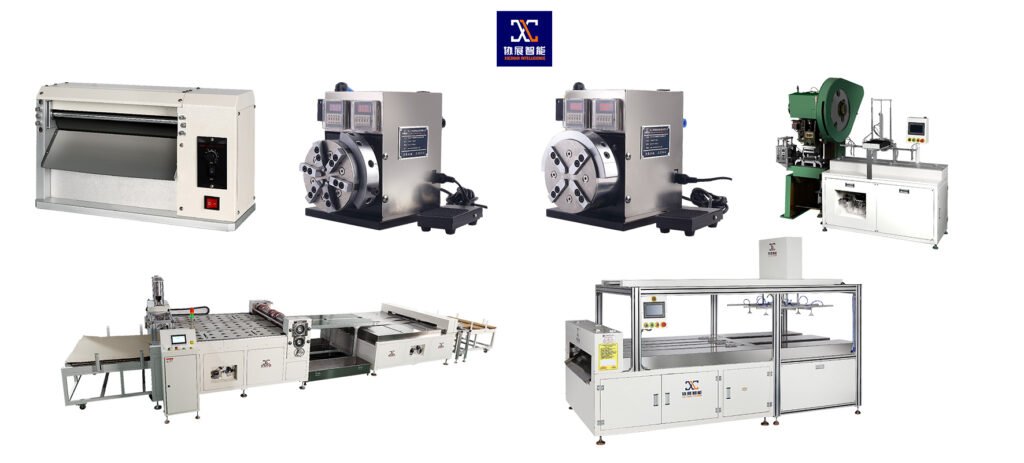
How to Select the Right Power System for Industrial Mica Punching
One of the first questions engineering managers ask is whether a hydraulic or pneumatic mica punching machine will deliver better long-term value. The answer depends less on the power source itself and more on the relationship between punching force, material characteristics, production volume and tooling design. Selecting the wrong drive system can increase maintenance costs, reduce dimensional consistency and limit future production flexibility. Understanding how each system behaves under real manufacturing conditions is therefore more important than comparing specifications alone.
What Production Problem Are You Trying to Solve?
Many purchasing decisions begin with machine specifications, but experienced manufacturers usually begin somewhere else—they define the production problem first. Whether your factory struggles with inconsistent hole positioning, excessive burrs, slow tooling changes or rising labor costs will determine which punching technology creates the greatest improvement.
The mechanical reason is straightforward. Hydraulic and pneumatic systems generate force differently. Hydraulic cylinders deliver high and stable pressing force throughout the stroke, making them suitable for thicker mica boards or complex punching operations. Pneumatic systems rely on compressed air, producing faster cycles with simpler structures, which often makes them attractive for high-volume production of thinner mica components.
This difference directly influences production results. If your products require multiple holes, narrow slots or complex profiles, maintaining stable punching pressure becomes more valuable than simply increasing production speed. On the other hand, when manufacturing standardized insulation parts in large quantities, shorter cycle times may produce greater overall efficiency.
Factories with the lowest operating costs rarely choose a machine because of its drive system alone. They first identify which production constraint—force, speed, repeatability or maintenance—has the greatest impact on profitability, then select the technology that removes that bottleneck.
Before requesting quotations, rank your production priorities from most to least important. In most factories, consistent quality and equipment uptime generate greater long-term value than achieving the highest punching speed.
Another point frequently overlooked is process integration. A punching machine is rarely an isolated workstation. It usually follows cutting and precedes forming or assembly. Choosing a machine that integrates smoothly with upstream and downstream operations often creates more value than selecting the highest-capacity standalone press.
If your production includes cutting, edge trimming, punching and feeding operations, reviewing the complete manufacturing workflow is a practical starting point. Our Mica Sheet & Mica Board Processing Machines collection shows how different equipment can be combined into a coordinated production process rather than functioning as independent machines.
Why Does Force Delivery Affect Punching Quality?
Although both hydraulic and pneumatic machines perform the same basic operation, the way they generate and maintain force differs significantly. Hydraulic systems maintain relatively constant pressure during the working stroke, while pneumatic systems naturally experience pressure fluctuations caused by air compressibility. This distinction influences punching stability, particularly when processing thicker or higher-density mica materials.
From an engineering perspective, stable force reduces unexpected material deformation before fracture occurs. As a result, punch clearance remains more consistent, edge quality improves and tooling experiences more uniform loading over extended production runs. These mechanical advantages become increasingly noticeable as component geometry becomes more complex.
Which Drive System Matches Your Production Volume?
Production volume should influence machine selection as much as punching force. Many buyers immediately compare tonnage, but daily output, product variety and changeover frequency usually have a greater impact on long-term operating cost. A machine that perfectly suits one production model may become inefficient in another.
The reason is mechanical. Hydraulic systems generate force through pressurized oil, allowing the ram to maintain stable pressure during the complete working stroke. Pneumatic systems rely on compressed air, making the motion naturally faster but with lower available force. When processing identical thin mica parts continuously, this faster movement often increases throughput. However, when punching thicker boards or complex profiles, the stable pressure curve of a hydraulic system generally produces more consistent results.
| Comparison Item | Hydraulic | Pneumatic | Best Application | Procurement Recommendation |
|---|---|---|---|---|
| Punching Force | High and stable | Moderate | Thick mica boards | Choose hydraulic for demanding applications |
| Cycle Speed | Moderate | Fast | High-volume production | Ideal for standardized components |
| Maintenance | Hydraulic oil management required | Simpler routine maintenance | Clean production workshops | Consider available maintenance resources |
| Dimensional Stability | Excellent | Very good | Precision insulation parts | Evaluate product tolerance requirements |
Instead of comparing machine prices only, calculate the total cost of ownership over five years. Energy consumption, tooling life, maintenance intervals and production downtime often have a greater financial impact than the initial equipment investment.
Our engineering team has found that many factories initially focus on punching speed but later discover that material handling limits production efficiency. For this reason, automatic feeding equipment such as the XZ-SL300 Mica Sheet Automatic Stamping and Feeding Machine is frequently integrated with punching stations. Stable feeding minimizes positioning variation between cycles, helping both hydraulic and pneumatic machines maintain consistent production quality while reducing operator workload.
According to manufacturing studies published by Fraunhofer IPA, reducing variation between repeated manufacturing cycles often produces greater improvements in overall equipment effectiveness than simply increasing machine speed. Stable positioning and repeatable processing remain key factors in maintaining consistent product quality throughout continuous production.
Material selection also influences the preferred drive system. Different mica grades vary in density, resin content and structural characteristics, which directly affect punching resistance and tooling wear. Before finalizing equipment specifications, reviewing commonly available industrial mica materials helps establish realistic production expectations. You can explore our guide to Top 13 Mica Sheet Manufacturers in China to compare material options used across different heating element applications.
Which System Is Easier to Maintain Over the Long Term?
Maintenance cost is often underestimated during equipment selection because it is difficult to quantify before a machine enters production. However, after several years of operation, maintenance expenses frequently exceed the initial price difference between two machines. For this reason, experienced procurement teams evaluate serviceability as carefully as production capacity.
The reason lies in the different working principles. Hydraulic systems depend on oil cleanliness, sealing performance and pressure stability. As hydraulic oil circulates through pumps, valves and cylinders, contamination or seal wear can gradually affect system efficiency if preventive maintenance is ignored. Pneumatic systems eliminate hydraulic oil but rely on clean, dry compressed air. Moisture, unstable air pressure or inadequate filtration may shorten cylinder life and reduce positioning consistency.
From a manufacturing perspective, neither technology is inherently more reliable. Reliability is determined by whether the maintenance strategy matches the production environment. Factories with well-managed preventive maintenance programs often achieve excellent stability from hydraulic equipment, while facilities prioritizing simple maintenance procedures may prefer pneumatic systems for standardized production.
Unexpected downtime rarely originates from major mechanical failures. More commonly, it results from small maintenance tasks being delayed, such as replacing seals, monitoring air quality or inspecting tooling alignment. A structured preventive maintenance schedule generally produces greater long-term benefits than increasing machine specifications.
When comparing suppliers, ask for a recommended maintenance schedule, common spare parts list and estimated replacement intervals. These details provide a clearer picture of long-term operating costs than the equipment quotation alone.
How Can You Reduce Procurement Risk Before Making a Final Decision?
Choosing between hydraulic and pneumatic equipment becomes much easier when procurement is based on production evidence rather than assumptions. Instead of asking which technology is generally better, ask which technology performs better for your own products. Sample parts, material specifications and production targets provide objective information that allows suppliers to recommend suitable configurations.
The mechanical principle is straightforward. Every punching application combines different variables, including material thickness, hole geometry, punching frequency and tooling structure. Small differences in these variables may significantly change the preferred drive system. Evaluating actual production samples minimizes uncertainty and reduces the likelihood of expensive equipment modifications after installation.
Another practical consideration is supplier experience with complete production lines. A supplier familiar with mica cutting, punching, feeding and heating element assembly can often identify process improvements that extend beyond a single machine. This broader engineering perspective helps manufacturers build production lines that remain efficient as product requirements evolve.
Many international manufacturers have adopted this approach by evaluating complete production workflows before selecting individual machines. You can explore examples of these real-world implementations on our Client Cooperation page, where different production requirements have been translated into practical equipment solutions.
Factories that achieve the most stable production typically make equipment decisions using actual samples rather than specification sheets alone. A short trial using the customer’s own mica material and tooling requirements often reveals factors that cannot be identified from technical data alone, leading to more reliable long-term investment decisions.
Which Technology Delivers the Best Long-Term Return on Investment?
After comparing force, speed, maintenance and production flexibility, the final decision should focus on long-term manufacturing performance rather than a single specification. In our experience working with heating element manufacturers, companies that evaluate equipment over a five- to ten-year production cycle generally make more profitable investments than those concentrating only on purchase price.
The reason is straightforward. Machine performance is only one part of the overall production cost. Tooling life, spare parts availability, maintenance efficiency, operator training and future production expansion all contribute to the total cost of ownership. A hydraulic system may provide greater value for factories processing thicker mica boards with demanding tolerances, while a pneumatic system often becomes the more economical choice for standardized, high-volume production where speed and simplified maintenance are priorities.
Another factor worth considering is future product development. Many manufacturers initially purchase equipment for one product family but gradually expand into additional heating element applications. Selecting a machine with sufficient flexibility for future tooling modifications often reduces capital investment over the long term and minimizes production interruptions when new products are introduced.
The most successful purchasing decisions are rarely based on whether a machine is hydraulic or pneumatic. They are based on selecting equipment that fits the factory’s production rhythm, maintenance capability and future business strategy. Matching technology to manufacturing objectives consistently produces better long-term results than selecting the highest specification available.
Final Recommendation for Equipment Selection
There is no universal answer to the hydraulic versus pneumatic debate because every production environment is different. Manufacturers producing large batches of relatively simple mica components often benefit from the efficiency of pneumatic systems, while factories processing thicker materials, tighter tolerances or more complex geometries generally appreciate the consistent force characteristics of hydraulic equipment.
Before making a final investment, prepare representative product drawings, material specifications, expected annual production volume and future expansion plans. These practical production details allow equipment recommendations to be based on measurable manufacturing requirements instead of assumptions. In our projects, this evaluation process has consistently reduced commissioning time and improved production stability after installation.
Choose a supplier that understands the complete mica processing workflow—from material preparation and punching to downstream assembly—instead of evaluating machines as isolated pieces of equipment. Integrated engineering support usually creates greater value than small differences in initial purchase price.
If you are planning a new production line or upgrading an existing one, our engineering team can review your drawings, production targets and material specifications to recommend a practical solution based on your actual manufacturing requirements. Whether you are evaluating hydraulic or pneumatic equipment, our objective is to help you build a production process that remains stable, efficient and scalable as your business grows.
For technical consultation, equipment recommendations or customized mica processing solutions, please visit our Contact Us page. Our engineers will work with you to evaluate your application and recommend equipment that aligns with your production goals.