
Why Mica Is Used in Industrial Heating Elements
What Industrial Buyers Really Expect from Heating Element Insulation Materials
If you ask heating element manufacturers why they continue using mica insulation board after decades of material innovation, the answer is surprisingly practical: few materials can balance heat resistance, electrical insulation, structural stability, and manufacturing cost at the same time. In industrial heating systems, insulation failure is rarely a minor issue. It directly affects safety, product lifespan, warranty rates, and production consistency. That is why heat resistant mica remains one of the most trusted materials across appliance heating, industrial heating bands, and electrical insulation processing applications.
Over the past several years, we have discussed insulation material selection with heating element factories, OEM appliance manufacturers, and engineering teams from multiple export markets. One pattern appears repeatedly: buyers are no longer asking only “What temperature can the material withstand?” They now ask deeper operational questions involving long-term stability, forming capability, processing precision, and compatibility with automated production.
Insight
The biggest shift in industrial heating during the past decade is not higher temperature demand. It is the demand for stable insulation performance under continuous production conditions.
Survey Question 1: Why Do Most Heating Element Manufacturers Still Use Mica?
This is often the first question purchasing managers raise when evaluating alternative insulation materials.
From a technical perspective, mica insulation board provides three major advantages:
- Excellent dielectric insulation
- Stable high-temperature resistance
- Good mechanical processing capability
Many alternative insulation materials perform well in only one or two of these areas. Mica performs reasonably well across all three simultaneously, which is why it remains widely used in heating element insulation.
For manufacturers producing hair dryers, industrial band heaters, heating plates, or compact appliance heaters, material flexibility during shaping and forming also becomes important.
This explains why mica continues to dominate many heating system applications despite the availability of newer materials.
Survey Question 2: What Problems Occur When Insulation Materials Are Unstable?
When insulation quality becomes inconsistent, the consequences usually appear later in production or field operation.
| Common Issue | Typical Cause | Production Impact | Field Risk | Buyer Concern |
|---|---|---|---|---|
| Cracking During Forming | Poor Material Structure | Higher Scrap Rate | Insulation Failure | Production Stability |
| Electrical Leakage | Insufficient Insulation | Rework Increase | Safety Risk | Compliance |
| Thermal Deformation | Poor Heat Resistance | Assembly Misalignment | Reduced Lifespan | Warranty Claims |
| Dimensional Variation | Cutting Inaccuracy | Assembly Delays | Performance Instability | Mass Production Control |
One misconception among newer buyers is that insulation material problems will become obvious immediately. In reality, many issues appear only after repeated thermal cycling during long-term use.
Advice
When evaluating mica insulation board suppliers, request samples processed under real heating conditions rather than flat raw sheets only.
Survey Question 3: Why Does Processing Capability Matter as Much as Material Quality?
This is something many purchasing teams discover only after scaling production.
Even high-grade mica insulation board can create production issues if the processing equipment cannot maintain dimensional consistency.
In heating element manufacturing, insulation materials often require:
- Precision cutting
- Hole punching
- Edge trimming
- Roll forming
- Custom shaping
That is why manufacturers increasingly invest in dedicated electrical insulation processing systems.
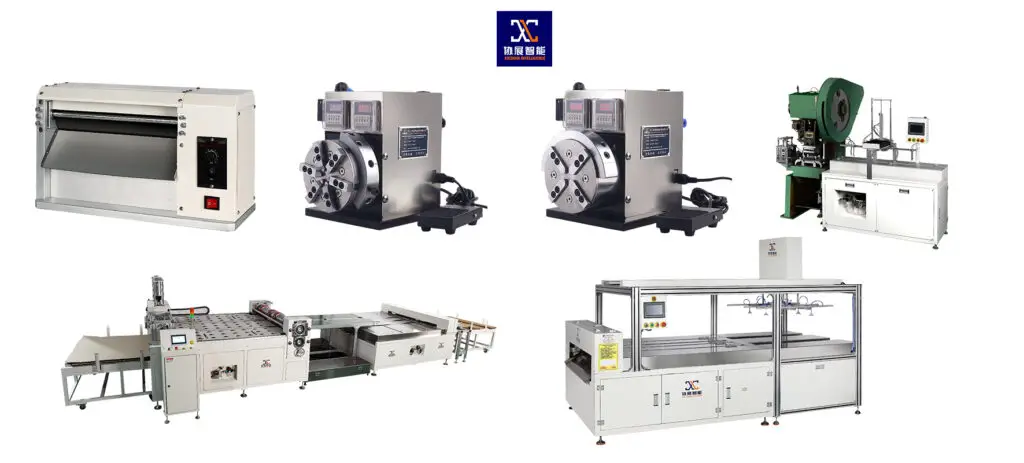
For example, automated cutting systems such as the XZ-JB1212 and XZ-XB1300 improve dimensional consistency during mica sheet preparation, while forming equipment like the XZ-J730D supports curved mica structures used in appliance heaters.
Survey Question 4: Why Is Heat Resistant Mica Still Preferred in Compact Heating Designs?
Compact heating products create unique engineering challenges.
As products become smaller, internal heat concentration increases. This places higher demands on insulation materials.
Many manufacturers prefer heat resistant mica because it offers:
- Thin structural profiles
- Stable insulation performance
- Resistance to repeated thermal cycling
- Compatibility with complex forming processes
This is especially important for:
- Hair dryers
- Industrial band heaters
- Heating plates
- Compact appliance heaters
- Portable heating systems
Factories producing export-oriented appliances also value mica because it supports more stable certification performance across large production volumes.
Advice
For compact heater applications, dimensional consistency often matters more than maximum temperature rating alone.
Survey Question 5: What Do Experienced Buyers Usually Check Before Choosing a Mica Supplier?
From actual factory discussions, experienced buyers usually focus on five areas:
| Evaluation Area | Reason | Production Impact | Common Risk | Preferred Supplier Capability |
|---|---|---|---|---|
| Heat Resistance Stability | Continuous Operation | Longer Product Life | Material Aging | Stable Raw Materials |
| Cutting Precision | Assembly Accuracy | Lower Scrap | Size Variation | CNC Processing |
| Forming Capability | Complex Heater Design | Better Product Fit | Cracking | Controlled Forming |
| Production Capacity | Stable Delivery | Supply Reliability | Delayed Orders | Automation Capability |
Why Mature Manufacturers Invest in Dedicated Mica Processing Systems
As production volumes increase, manual processing becomes difficult to control consistently.
This is why many industrial heater manufacturers gradually transition toward automated insulation processing systems.
At Guangdong Xiezhan manufacturer and factory, many customers focus not only on raw mica materials but also on how insulation materials are processed throughout the production chain.
Consistent mica sheet handling often determines:
- Assembly efficiency
- Thermal stability
- Electrical safety
- Production yield
- Long-term product reliability
This is one reason dedicated mica processing systems continue gaining importance in industrial heating production.
Industry Observation
Factories producing export-oriented heating elements increasingly prioritize process consistency over raw material cost reduction. Stable insulation performance reduces warranty risks significantly over long production cycles.
Advice
If you are sourcing heating element insulation materials for automated production, evaluate both material quality and processing compatibility together.
Final Thoughts
Mica insulation board remains widely used in industrial heating systems because it solves multiple engineering problems simultaneously. It combines heat resistance, electrical insulation, forming flexibility, and manufacturing practicality in ways few alternative materials currently match.
For experienced buyers, the real question is no longer whether mica should be used. The more important question is how consistently the material can be processed and integrated into stable heating element production.
This is why manufacturers increasingly focus on complete insulation processing capability rather than raw material sourcing alone.
You can explore our related mica processing solutions on the Mica Sheet & Mica Board Processing Machines page.
To understand how we cooperate with international manufacturers, visit our Client Cooperation section and learn more about our About Us page.
If you are evaluating insulation processing capability for heater manufacturing projects, feel free to contact our engineering team through the Contact Us page.
Contact Our Team
Similar Posts
Medical Guide Wire Winding Machine for Precision Micro Coils
ByXiezhanMedical Guide Wire Winding Machine The Medical Guide Wire Winding Machine is a high-precision micro winding system designed for manufacturing extremely fine coils used in medical devices.This equipment is specifically engineered to produce micro spring wire and precision coils that are commonly used in medical guide wires and minimally invasive surgical instruments. Guide wires play…
أنواع ماكينات لف أسلاك التسخين ومتى تحتاج كل نوع؟
ByXiezhanكيف تحدد نوع ماكينة اللف المناسب لمنتج التسخين الذي تصنعه؟ إذا كنت تشتري ماكينة لف جديدة، فلا تبدأ من اسم الماكينة أو سرعة اللف. ابدأ من شكل عنصر التسخين الذي تريد إنتاجه. السبب أن السلك الملفوف على قلب معدني، والسلك الملفوف على صفائح الميكا، والسلك الذي يتحول إلى heating rope، والـ spring coil ليست عمليات…
What Production Capacity Should a Mica Processing Line Have?
ByXiezhanPlanning the Right Capacity for Your Mica Manufacturing Production Line The correct production capacity of a mica processing line depends on more than the number of parts a machine can process per hour. For manufacturers, the real question is whether the equipment can continuously support order demand, product quality requirements and future growth. A small…
Why Manual Winding Still Exists in Some Factories
ByXiezhanMany procurement managers assume that once a factory reaches a certain scale, manual winding should disappear entirely. In reality, that assumption is not always aligned with production economics. Manual winding still exists in some heating element factories because it offers flexibility, lower upfront investment, and practical advantages in low-volume or frequently changing product environments. The…
How Automated Mica Board Machines Increase Production Efficiency
ByXiezhanWhy Production Efficiency Depends on More Than Machine Speed Many factory owners initially assume production efficiency is mainly about faster machine movement. In actual mica insulation manufacturing, the situation is far more complicated. Real production efficiency comes from maintaining stable feeding, reducing material waste, minimizing downtime, controlling dimensional variation, and keeping production consistent across long…
Design Trade-Offs in Compact Winding Machines
ByXiezhanWhat You Gain—and Lose—When Choosing Compact Machine Designs If you’re considering a compact winding machine, the real question is not “Will it fit my space?”—it’s “What am I giving up to make it fit?” Smaller machines solve layout constraints, but they often introduce trade-offs in stability, flexibility, and long-term output consistency. Many buyers only realize…