
How Automated Mica Processing Improves Production Consistency
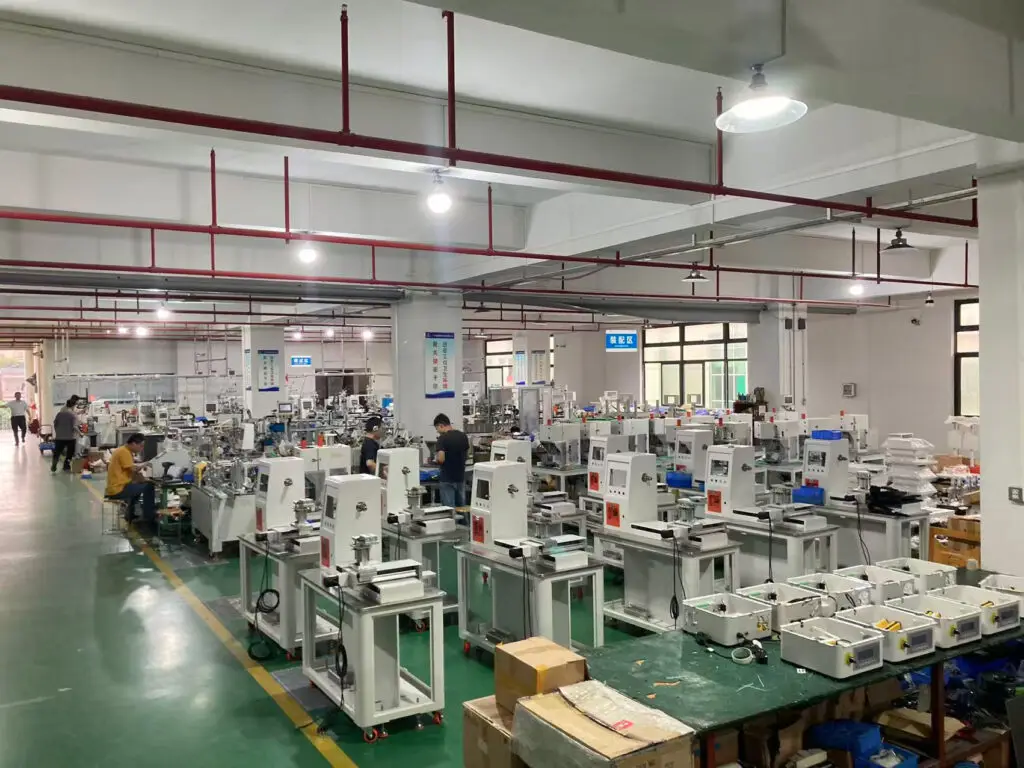
Production Consistency Begins Long Before Final Inspection
Ask experienced production managers what customers complain about most, and the answer is rarely “machine speed.” Instead, they mention inconsistent dimensions, unstable product quality, excessive scrap, delayed deliveries, and frequent production adjustments. These issues often share the same root cause—variation during manufacturing. Modern mica processing automation addresses this challenge by replacing operator-dependent processes with repeatable, data-driven production methods that deliver consistent results day after day.
Consistency has become one of the most valuable competitive advantages for manufacturers supplying heating elements, industrial insulation components, and electrical appliances. Whether producing hundreds or hundreds of thousands of mica parts each month, buyers increasingly expect every component to match the previous one without additional inspection or manual correction.
Factories that achieve the highest customer retention rates usually don’t own the fastest production lines. They own the most predictable ones. Stable output, repeatable dimensions, and consistent delivery schedules create far greater long-term value than occasional peak production speeds.
Why Has Production Consistency Become a Key Purchasing Criterion?
Five years ago, many procurement teams compared equipment primarily by hourly capacity. Today, discussions have shifted toward stability, traceability, and long-term operating costs.
Several global manufacturing trends are driving this change.
- Labor shortages are increasing operator turnover.
- Customers demand tighter dimensional tolerances.
- Production batches are becoming larger.
- Quality documentation requirements continue rising.
- Manufacturers need predictable operating costs.
These pressures have encouraged factories to move away from isolated manual processes toward integrated automation throughout the production workflow.
What Does Production Consistency Really Mean?
Many buyers associate consistency with dimensional accuracy alone. In reality, consistency extends much further.
A truly stable production line should produce components that remain uniform across multiple shifts, operators, material batches, and production dates.
This includes:
- Identical cutting dimensions
- Stable punching locations
- Consistent forming quality
- Repeatable assembly accuracy
- Reliable production scheduling
When each stage performs predictably, manufacturers spend less time on adjustment, inspection, and rework.
Industry Statistics: Where Does Production Variation Usually Come From?
Research published by Deloitte and McKinsey on manufacturing automation consistently shows that process variation—not raw material quality alone—accounts for a significant share of production inefficiency in discrete manufacturing. Companies implementing automated production technologies frequently report measurable improvements in defect reduction, throughput stability, and overall equipment effectiveness after reducing manual intervention.
While exact percentages vary across industries, the conclusion remains remarkably consistent: reducing process variation improves both profitability and customer satisfaction.
Where Do Manual Processes Introduce Hidden Variation?
Many manufacturers underestimate how often small manual adjustments accumulate throughout production.
For example, one operator may position material slightly differently than another. A second shift may apply different inspection standards. Tool adjustments performed manually can also vary between technicians.
Individually these differences appear insignificant.
Collectively they become measurable quality variation.
| Production Stage | Manual Process | Automated Process | Primary Improvement | Business Impact |
|---|---|---|---|---|
| Material Positioning | Operator Experience | Automatic Alignment | Higher Accuracy | Lower Scrap |
| Board Cutting | Frequent Adjustment | Program Controlled | Stable Dimensions | Reduced Rework |
| Punching | Manual Feeding | Synchronized Feeding | Uniform Hole Position | Improved Assembly |
| Inspection | Sampling | Consistent Output | Fewer Defects | Lower Quality Cost |
| Production Planning | Variable Output | Predictable Capacity | Reliable Scheduling | Better Customer Delivery |
How Automation Improves Every Step of Mica Processing
Automation is often misunderstood as replacing workers. In successful factories, automation performs a different role—it removes variation from repetitive tasks so operators can focus on supervision, quality verification, and process improvement.
Cutting
The cutting stage establishes the dimensional foundation for every downstream process.
Machines such as the XZ-JB1212 Fully Automatic Mica Board Cutting Machine and the XZ-XB1300 Fully Automatic Four Edge Trimming and Cutting Machine provide CNC-controlled cutting with ±0.2 mm accuracy. Instead of relying on repeated manual adjustments, production parameters remain stable across long manufacturing runs.
Many manufacturers upgrading their insulation production lines begin by evaluating complete Mica Sheet & Mica Board Processing Machines, because improving dimensional consistency at the cutting stage significantly reduces problems later during punching and assembly.
Punching And Feeding
After cutting, maintaining consistent material positioning becomes equally important.
The XZ-SL300 Automatic Mica Sheet Stamping and Feeding Machine combines automatic feeding with synchronized punching, minimizing positioning variation that frequently occurs during manual handling.
Rather than depending on operator judgement, every sheet follows the same controlled movement path, creating much more repeatable production results.
Why Consistency Is More Valuable Than Maximum Speed
Many equipment comparisons still focus heavily on output per hour. While production capacity certainly influences return on investment, experienced purchasing managers know that unstable high-speed production often costs more than stable medium-speed production.
Every rejected mica board consumes raw material, labor, machine time, electricity, and inspection resources. Even worse, inconsistent components can interrupt downstream assembly, delaying customer deliveries and increasing operating costs.
This is why mature manufacturers increasingly evaluate overall production stability instead of comparing machines by speed alone.
In our experience as a manufacturer serving global heater producers, customers upgrading from semi-automatic production lines frequently report that the greatest improvement is not higher output, but the dramatic reduction in daily process adjustments.
When comparing automated mica board machines, ask suppliers to demonstrate continuous production over several hours rather than a short machine demonstration. Stable dimensional consistency across an extended production run provides a much better indication of long-term manufacturing performance than peak cycle speed.
How Automation Creates Measurable Business Value
Production consistency should not be viewed solely as an engineering objective. It also delivers measurable commercial advantages that directly affect profitability.
When process variation decreases, manufacturers typically experience improvements across several business areas.
- Lower raw material consumption through reduced scrap.
- Shorter setup time for new production batches.
- More accurate production scheduling.
- Higher first-pass qualification rates.
- Reduced dependence on highly experienced operators.
- Greater confidence when accepting large export orders.
These benefits often accumulate gradually, making them less visible than increases in production speed. However, over several years of operation, they frequently contribute more to total return on investment than capacity improvements alone.
How International Buyers Evaluate Automated Production Lines Today
Procurement practices have changed considerably over the past decade.
Instead of asking only about technical specifications, engineering teams now investigate how equipment performs under real production conditions. Questions commonly raised during factory visits include:
- Can dimensional accuracy remain stable throughout an entire production shift?
- How quickly can new operators become productive?
- How often does the production line require adjustment?
- Can multiple machine models operate together efficiently?
- Does the supplier provide engineering support after installation?
These questions reflect a broader shift from purchasing individual machines to investing in reliable manufacturing systems.
Many overseas customers reviewing our client cooperation projects are less interested in isolated machine specifications than in understanding how complete production lines have helped similar manufacturers improve stability, reduce waste, and expand production capacity.
Automation Works Best When Combined With High-Quality Raw Materials
Even the most advanced automated equipment cannot compensate for poor-quality raw materials. Consistent production depends on both reliable machinery and stable mica board quality.
For manufacturers evaluating new suppliers, selecting appropriate raw materials should be part of the same decision-making process as equipment investment. Buyers who are still comparing material sources often find it useful to review our guide to Top 13 Mica Sheet Manufacturers, which outlines several suppliers serving the global heating element industry.
Combining premium mica sheets with automated processing creates a manufacturing environment capable of delivering consistent products over long production cycles.
Looking Ahead: Automation Is Becoming the New Manufacturing Standard
The industry is gradually moving beyond simple equipment upgrades toward intelligent, integrated manufacturing. As customer expectations continue rising, factories will need production systems capable of maintaining quality regardless of production volume or workforce changes.
Automation is no longer viewed as an optional productivity enhancement. It is becoming the foundation for predictable manufacturing, especially in industries where precision insulation components play a critical role.
Manufacturers investing today are preparing not only for current production requirements but also for future market expectations, where consistency, traceability, and process stability will increasingly determine supplier competitiveness.
Final Thoughts
Automation delivers its greatest value by reducing variation rather than simply increasing production speed. Every stage—from cutting and feeding to punching and final inspection—contributes to overall product consistency. When these stages are integrated through modern mica processing automation, manufacturers gain tighter dimensional control, lower operating costs, and greater confidence in delivering large production orders.
At Xiezhan Machinery, we continue developing automated mica board machine solutions that combine precision engineering with practical manufacturing experience. Our goal is to help customers build production lines that remain stable not only during machine acceptance, but throughout years of daily operation.
If you are planning to upgrade your mica processing line or would like to discuss the most suitable automation solution for your products, our engineering team is ready to help. Feel free to contact us to discuss your production requirements and future expansion plans.