
Heater Coil Winding Machine vs Resistance Wire Winder: Key Differences
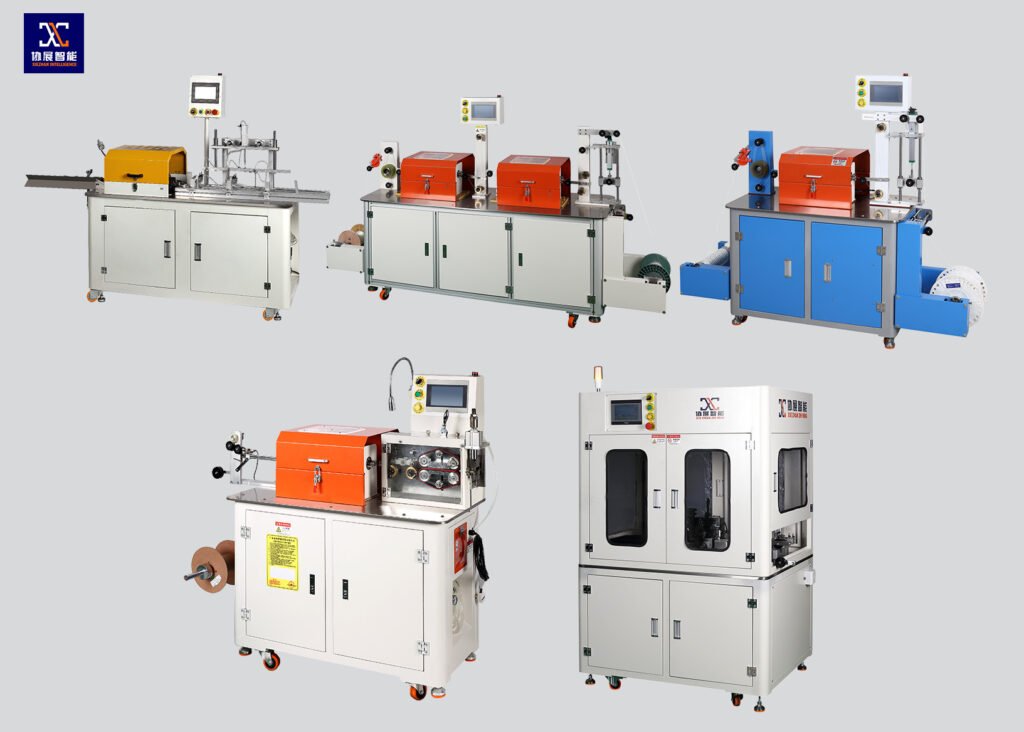
When comparing a heater coil winding machine with a resistance wire winder, the key question is simple: which one actually fits your production goal? On the surface, both machines wind wire. But in real manufacturing—especially for heating elements—the difference is not about winding itself, but about how precisely the machine controls geometry, resistance, and integration with downstream assembly. Choosing the wrong type often leads to hidden inefficiencies rather than immediate failure.
Are Heater Coil Winding Machines and Wire Winders the Same?
This is one of the most common misunderstandings in procurement. Many suppliers present both machines under similar categories, and in some regions, they are even referred to using the same term.
However, in engineering practice, they serve different purposes:
- Resistance wire winder: general-purpose wire forming
- Heater coil winding machine: process-specific equipment for heating elements
The distinction becomes critical when production moves from prototyping to mass manufacturing.
What Are the Core Technical Differences?
The differences are not just in naming—they are embedded in machine architecture and control philosophy.
| Aspect | Heater Coil Winding Machine | Resistance Wire Winder | Impact in Production |
|---|---|---|---|
| Application | Heating element production | General wire forming | Process compatibility |
| Tension Control | High precision, closed-loop | Basic or manual | Resistance stability |
| Process Integration | Mica & assembly aligned | Standalone | Efficiency |
| Repeatability | High | Moderate | Batch consistency |
| Adaptability | Material-specific tuning | Limited | Product flexibility |
Why Do Buyers Confuse These Two Machines?
The confusion comes from overlapping terminology across regions:
- In Southeast Asia: “wire winding machine” is used broadly
- In India: “heater coil machine” may refer to both
- In Europe: distinctions are clearer, focusing on application
Additionally, many general-purpose machines are marketed as suitable for heating elements, even when they lack process-specific features.
Where Does the Difference Show in Real Production?
The difference becomes visible after several weeks of operation.
1. Resistance Consistency
Heating elements require strict resistance control. Even small variations affect performance.
Industry data indicates that resistance deviation beyond ±2–3% increases failure risk significantly in appliances such as hair dryers and electric heaters.
General wire winders often struggle to maintain this consistency due to unstable tension control.
2. Coil Geometry Stability
In heating element production, coil pitch and diameter must remain consistent to fit mica carriers.
- Heater coil machines maintain stable pitch
- General winders show variation under long runs
3. Downstream Compatibility
A properly wound coil must align with assembly processes such as eyelet riveting and terminal fixing.
Machines designed without this in mind create bottlenecks later in production.
When Is a Resistance Wire Winder Still Suitable?
It would be incorrect to say that general wire winders have no place in manufacturing.
They are suitable for:
- Prototype development
- Low-volume production
- Non-heating applications
- Flexible or experimental setups
For these cases, cost efficiency may outweigh precision requirements.
Why Do Mature Manufacturers Shift to Dedicated Heating Equipment?
As production scales, limitations become more expensive:
- Higher defect rates increase material waste
- Manual adjustments slow down production
- Inconsistent output affects product reliability
According to manufacturing research, improving process stability can reduce total production cost by up to 12%, even without increasing speed.
This is why experienced buyers eventually move toward machines designed specifically for heating element production.
What Defines a Process-Oriented Machine?
At Guangdong Xiezhan, the distinction is not about adding features, but about aligning machine design with real production needs.
As a specialized manufacturer and factory, the focus includes:
- Material-specific tension algorithms
- Stable mechanical structure for long-term operation
- Integration with mica heating element assembly
- Compatibility with downstream processes
This system-level approach is reflected in real applications shown in client cooperation, where production stability is prioritized over isolated performance metrics.
How Should You Decide Between the Two?
Instead of comparing machines directly, align your decision with production goals:
- If your focus is heating element manufacturing → choose dedicated winding systems
- If your need is general wire forming → a resistance wire winder may suffice
You can also review broader supplier positioning through resources such as heater coil winding machine manufacturers.
Final Perspective for Procurement Decision Makers
The difference between a heater coil winding machine and a resistance wire winder is not just technical—it is strategic.
One is designed for controlled, repeatable heating element production. The other is built for general flexibility.
Choosing the right one depends on whether your priority is precision and stability, or versatility and lower initial cost.
If you are evaluating options based on your specific product and production targets, you can reach out through the contact page for a detailed discussion.