
How to Maintain Winding Accuracy Over Long Production Runs
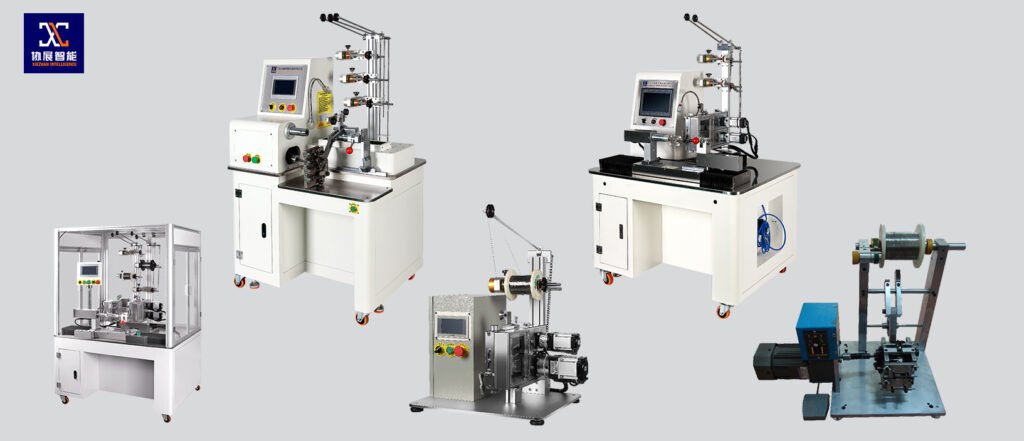
How to Keep Winding Precision Stable During Continuous Production
If your winding process starts accurately but loses consistency after several hours—or days—the issue is not unusual. In long production runs, even high-quality equipment can show small deviations that accumulate into visible defects. The key question is not whether drift happens, but how well your process and equipment are prepared to control it.
For buyers working with winding machine systems in heating element or coil production, maintaining accuracy over time is what separates stable output from constant adjustment. This article breaks down how experienced manufacturers approach this challenge in real production environments.
Why Does Winding Accuracy Drop Over Long Production Runs?
Accuracy loss is not caused by a single factor. It’s the result of small changes building up across the system.
The most common contributors include:
- Gradual mechanical wear
- Thermal expansion during continuous operation
- Wire material variation between batches
- Sensor and feedback signal drift
If you’ve seen this happen, it connects directly to what we discussed here: why machines drift after extended use.
According to a Fraunhofer Institute manufacturing study, precision loss in continuous processes can reach 12–18% over extended runs if no compensation strategy is applied.
What Actually Defines “Stable Accuracy” in Winding?
Many buyers evaluate accuracy based on initial samples. In reality, stability matters more than starting precision.
Stable accuracy means:
- Consistent coil pitch over time
- Uniform tension throughout production
- Minimal operator intervention
- Predictable output across shifts
In a coil winding machine, even slight variation in tension or positioning can lead to measurable differences in final products—especially in heating elements where resistance consistency matters.
Step-by-Step: How to Maintain Accuracy Over Long Runs
Let’s break this into practical actions that experienced buyers and factories follow.
1. Stabilize Mechanical Structure First
Everything starts with the machine itself.
Key points:
- Use high-rigidity frames to reduce vibration
- Ensure guide rails and bearings are precision-grade
- Maintain proper alignment from installation stage
Without structural stability, no control system can fully compensate.
2. Control Thermal Effects During Operation
Heat buildup changes dimensions and affects accuracy.
Practical approaches:
- Allow warm-up time before full production
- Use machines with proper heat dissipation design
- Monitor temperature-sensitive components
3. Use Adaptive Tension Control Systems
Static tension settings are one of the biggest causes of long-run inconsistency.
Look for:
- Servo-controlled tension systems
- Real-time feedback adjustment
- Material-specific parameter presets
This is especially critical when switching between different wire alloys or diameters.
4. Standardize Material Input
Even small variations in wire can affect results.
Best practices:
- Use consistent suppliers for resistance wire
- Check batch-to-batch variation
- Adjust parameters when material changes
In heating element production, material consistency is often as important as machine capability.
5. Reduce Operator Dependency
Manual correction introduces variability.
Instead:
- Automate adjustments where possible
- Use preset programs
- Train operators on monitoring rather than correcting
Where Most Production Lines Fail to Maintain Accuracy
From real project experience, the biggest issue is not lack of technology—it’s incomplete system thinking.
Common gaps include:
- Focusing only on machine specs, not process stability
- Ignoring long-run performance during testing
- Underestimating material variation impact
According to a Deloitte industrial manufacturing report, over 35% of production inefficiencies come from system-level mismatches rather than individual machine limitations.
What to Check Before Buying a Winding Machine for Long Runs
| Evaluation Area | Key Question | Risk if Ignored | Impact on Production | Priority Level |
|---|---|---|---|---|
| Machine structure | Is rigidity sufficient? | Vibration | Accuracy loss | High |
| Tension system | Is it adaptive? | Inconsistent output | Defects | High |
| Thermal management | How is heat handled? | Dimensional drift | Variation | Medium |
| Material compatibility | Range of supported wires? | Frequent adjustment | Instability | High |
| Control system | Real-time feedback? | Delayed correction | Downtime | Medium |
You can compare different machine configurations in our winding machine category.
Why Experienced Buyers Focus on Stability Over Speed
In early-stage procurement, speed often looks like the most important metric.
But in long production runs, stability defines real output.
Factories that prioritize stability typically achieve:
- Lower defect rates
- Reduced downtime
- More predictable production planning
Many long-term clients in the client cooperation section shifted their priorities after experiencing inconsistency in early projects.
How a Specialized Manufacturer Supports Long-Run Accuracy
As a winding machine manufacturer focused on heating element equipment, we approach accuracy as a system issue—not just a machine feature.
Our approach includes:
- Designing for structural stability
- Integrating adaptive control systems
- Testing under extended production conditions
When buyers review our background through the about us page, they often focus on how we handle real production challenges—not just specifications.
Final Thought: Accuracy Is Not Set—It’s Maintained
Winding accuracy is not something you achieve once. It’s something you maintain continuously.
Machines, materials, and processes all change over time. The goal is to control those changes—not eliminate them.
If you’re planning a production line that runs continuously, accuracy stability should be a core decision factor—not an afterthought.
If you want to evaluate your current setup or plan a new line with long-run stability in mind, you can reach out through our contact us page. We usually review your process, material, and machine configuration together before giving recommendations.