
How CNC Wire Winding Machines Improve Precision in Coil Manufacturing
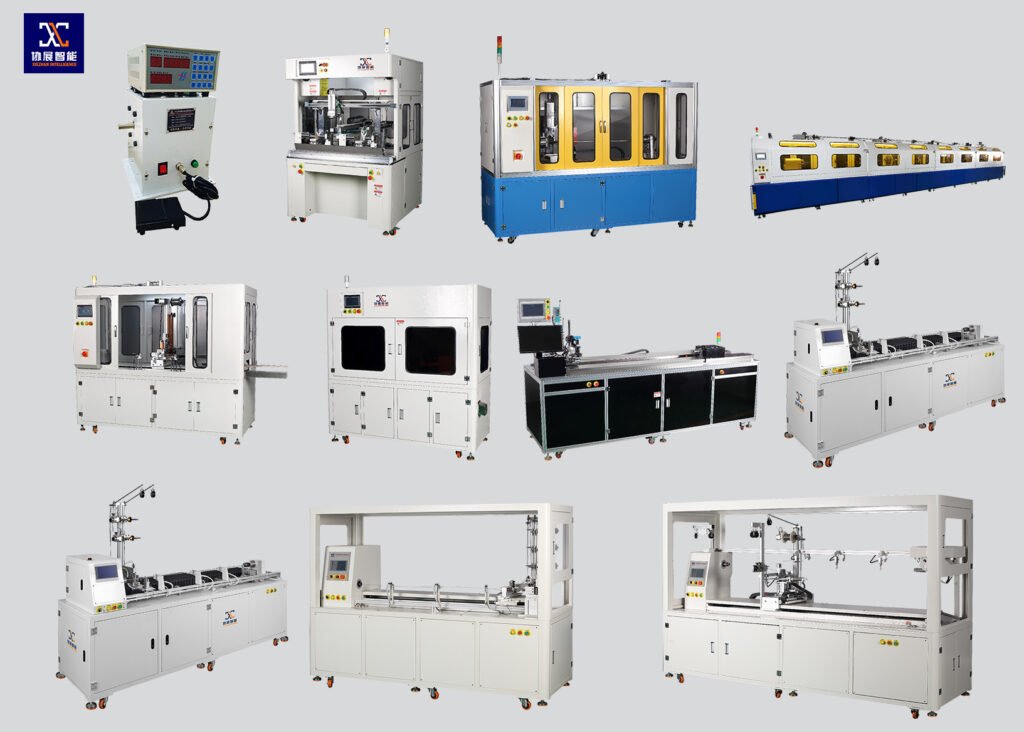
Why Precision Coil Makers Are Moving to CNC Winding Systems
If your coil dimensions drift, resistance values vary, or assembly rejects keep rising, the root problem is often not material quality—it is winding precision. In practical manufacturing, CNC wire winding machines solve three costly issues at once: repeatability, speed consistency, and operator dependency. For buyers comparing equipment, the question is no longer whether CNC matters, but how much instability your current process is costing every month.
If you are evaluating suppliers, review this Top CNC Wire Winding Machine Manufacturers guide for a wider market view.
What problem does CNC winding actually solve?
Many factories buy faster machines when they should be buying more controllable machines. Traditional winding setups often depend on operator feel, manual correction, and constant adjustment. That may work for basic products, but once tolerance tightens, defects increase quickly.
- Inconsistent pitch spacing
- Variable coil diameter
- Tension fluctuation during long runs
- Different results between shifts
- High setup time for repeat orders
How CNC wire winding machines improve precision
1. Servo-controlled movement
CNC systems coordinate spindle rotation, feed travel, and positioning in real time. That means each turn is placed where it should be, not where mechanical drift allows it.
2. Stored production recipes
Repeat orders can run with saved parameters for pitch, turns, speed, dwell points, and cutting sequence. This reduces human variation and shortens setup time.
3. Stable wire tension
Closed-loop tension control keeps wire feed stable across long production runs. This is critical for fine wire, spring wire, and heating element coil manufacturing.
4. Multi-axis geometry control
Complex coils, stepped diameters, tapered coils, and custom shapes become repeatable rather than operator-dependent.
Typical precision gains in real production
| Metric | Manual / Basic Machine | CNC Machine | Production Impact |
|---|---|---|---|
| Pitch Repeatability | Medium | High | Stable coil function |
| Changeover Time | Long | Short | Higher uptime |
| Scrap Rate | Higher | Lower | Lower unit cost |
| Shift Consistency | Variable | Stable | Predictable output |
Industry benchmarking commonly shows precision automation can lower scrap and rework by 15%–30% depending on product complexity.
Which buyers benefit most from CNC winding?
Heating element manufacturers
Nichrome and resistance wire coils require tight dimensional consistency for stable heating output.
Automotive suppliers
Repeatability and traceable batches matter more than raw machine speed.
Medical and electronics factories
Small coils with fine wire leave little room for operator error.
Recommended machine series for different scenarios
| Series | Wire Range | Best Use | Result |
|---|---|---|---|
| CNC Series | 0.05–1.2 mm | Precision coils | Low variation |
| NC Series | 0.10–2.0 mm | General heating coils | High output |
| SPRING Series | 0.20–3.0 mm | Heavy spring coils | Strong forming |
Where traditional machines still fall short
Basic machines may seem cheaper, but frequent adjustments consume skilled labor and uptime.
Without saved programs, repeat batches often need manual tuning and quality re-approval.
Manufacturing studies repeatedly show that repeat-order inconsistency creates larger cost losses than visible scrap.
Why experienced buyers choose integrated manufacturers
At Xiezhan, buyers often come to us after struggling with unstable output from entry-level machines. What they usually need is not more speed—it is more control.
As a manufacturer focused on winding equipment and heating element production systems, we help clients match machine capability to real production targets.
See working examples here: client cooperation projects
Learn more about our factory here: about us
Final thought: precision is a profit decision
When coil accuracy affects electrical performance, assembly yield, and customer returns, precision becomes a financial issue—not only a technical one.
Contact our team to discuss the right CNC winding solution for your production line.