
CNC Wire Winding Machine Applications in Heating Element Production
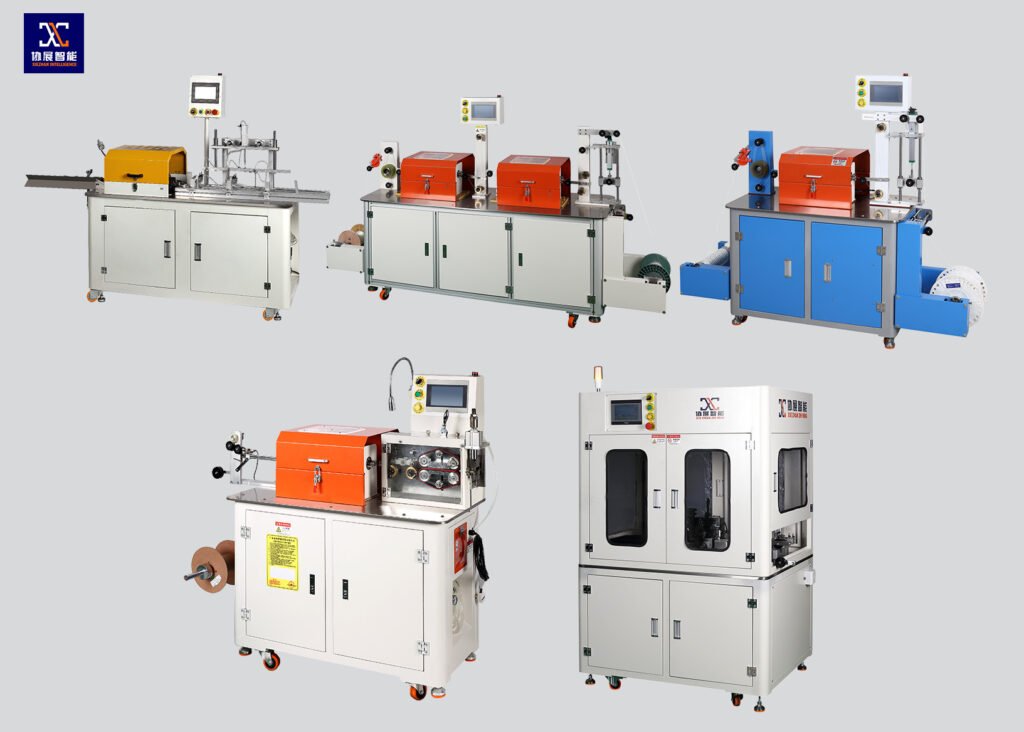
Where CNC Winding Systems Create Real Value in Heating Element Manufacturing
If you manufacture heating elements, the practical question is simple: where does CNC winding create measurable gains? From factory experience, the biggest returns come from tighter coil consistency, faster changeovers, lower scrap, and reduced dependence on skilled manual operators. In heating products, even small winding variation can affect wattage, lifespan, and assembly speed. That is why more buyers now move from semi-automatic setups to CNC wire winding systems.
If you are comparing suppliers, review this Top CNC Wire Winding Machine Manufacturers guide for a wider market view.
Why is CNC winding increasingly used in heating element production?
Heating element manufacturing depends on repeatability. A coil that looks acceptable can still fail if pitch spacing, wire tension, or coil diameter drifts outside control limits. CNC systems solve these issues through programmable motion and stable process control.
- Consistent pitch spacing
- Stable resistance performance
- Repeatable batch production
- Reduced manual adjustment
- Faster product changeover
Industry production data commonly shows automated precision winding can reduce rework and scrap by 15%–30% depending on product complexity.
Main application scenarios in heating element factories
1. Household appliance heating elements
Used for kettles, ovens, rice cookers, coffee machines, hair dryers, and similar consumer products. These lines need stable output, repeatable dimensions, and fast takt time.
Recommended series: CNC Series for automated batch production, NC Series for standard open-coil products.
2. Tubular heater production
Before MgO filling and tube reduction, resistance wire must be wound into precise spring coils. Coil diameter and pitch consistency strongly affect filling efficiency and internal positioning.
Recommended series: SPRING Series with constant tension control.
3. Flexible heating cable and floor heating wire
These products need continuous winding onto fiberglass or special carriers while maintaining long-run dimensional stability.
Recommended series: CNC Series with programmable feed synchronization.
4. Industrial furnace and process heaters
Large coils, heavy wire, and long operating cycles require robust mechanics and stable torque output.
Recommended series: SPRING Series or customized heavy-duty CNC systems.
| Application | Recommended Series | Wire Range | Main Benefit |
|---|---|---|---|
| Home Appliances | NC / CNC | 0.10–1.2 mm | Stable volume output |
| Tubular Heaters | SPRING | 0.20–2.5 mm | Accurate internal coil fit |
| Heating Cables | CNC | 0.05–0.8 mm | Long-run consistency |
| Industrial Heaters | SPRING / Custom | 0.5–5.0 mm | Heavy-duty forming |
What technical advantages matter most?
Precision pitch control
Multi-axis CNC movement allows fixed or variable pitch winding. This is useful for zone-heating designs where different sections require different heat output.
Wide material compatibility
Modern systems can process fine resistance wire around 0.02 mm up to heavy alloy wire near 5.0 mm depending on machine configuration.
Integrated automation
Automatic feeding, cutting, counting, and optional lead connection reduce labor steps and improve output consistency.
Advanced production lines using inline resistance monitoring can significantly reduce power deviation between batches.
Which machine type fits your factory scale?
| Machine Type | Best For | Typical Feature | Result |
|---|---|---|---|
| Automatic CNC | Large batch production | Up to high RPM, servo control | Maximum throughput |
| Multi-head CNC | High volume standard coils | 4–10 heads optional | More output per shift |
| Precision Spiral | Tubular heater coils | Constant tension focus | Stable resistance values |
Common buying mistakes that slow ROI
High RPM is useful only when wire control remains stable under load.
A narrow-spec machine can become a bottleneck when new orders arrive.
Dirty guides, poor lubrication, and uncalibrated sensors gradually destroy precision.
Many factories underestimate preventive maintenance. Monthly calibration of tension sensors and encoders often protects long-term repeatability.
Why experienced buyers work with integrated manufacturers
At Xiezhan, buyers usually approach us after facing unstable output, difficult changeovers, or inconsistent coil quality from entry-level systems.
Because we manufacture winding machines, heating element assembly equipment, and related production solutions, we can recommend equipment based on finished product goals rather than isolated machine specs.
See real project references here: client cooperation cases
Learn more about our factory here: about us
Final thought: CNC winding is now a production tool, not a luxury
For heating element factories competing on consistency, labor efficiency, and fast delivery, CNC winding has become a practical requirement.
Contact our team to discuss the right CNC solution for your heater production line.