
CNC vs Traditional Mica Board Cutting Machines
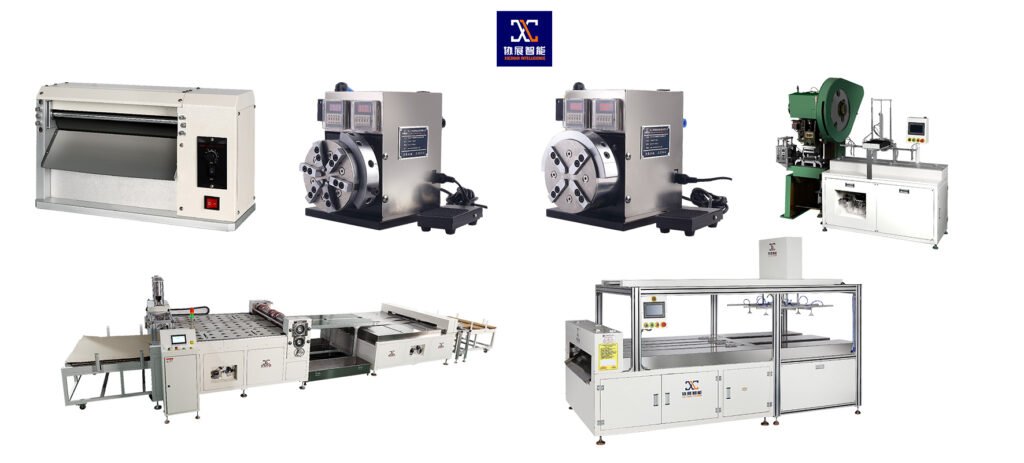
How Industrial Factories Choose Between CNC and Traditional Mica Cutting Systems
When manufacturers compare CNC and traditional mica board cutting machines, the decision usually comes down to one practical issue: production stability under real factory conditions. Traditional machines still work well in some operations, especially where order quantities are flexible and investment budgets are tighter. But once factories start facing labor instability, tighter tolerance demands, or export-level consistency requirements, CNC systems begin showing clear long-term advantages.
Many factories upgrading to CNC mica sheet forming machine systems are not chasing speed alone. They are trying to eliminate unpredictable production variation that affects downstream assembly and delivery consistency.
Why Is This Comparison Becoming More Important Globally?
Five years ago, many mica board manufacturers focused mainly on cutting capacity. Today, procurement priorities have changed.
Factories now operate under increasing pressure from:
- Labor shortages
- Higher dimensional consistency requirements
- Export quality expectations
- More product variations
- Pressure to reduce waste
Under these conditions, the difference between CNC and traditional cutting systems becomes more significant than before.
Experienced buyers are no longer asking only:
“How fast can the machine cut?”
Instead, they ask:
“How stable will this machine remain after running continuously for six months?”
What Is the Actual Difference Between CNC and Traditional Systems?
At first glance, both machine types perform similar tasks. Both can cut mica sheets and mica boards into required dimensions.
The operational logic behind them, however, is completely different.
Traditional mica board cutting machine systems rely more heavily on:
- Manual positioning
- Mechanical adjustment
- Operator experience
- Physical measurement control
CNC systems rely more on:
- Programmable positioning
- Servo-controlled motion
- Automated dimensional adjustment
- Repeatable cutting logic
That difference affects nearly every part of production performance.
| Machine Model | Machine Type | Key Specifications | Best Production Scenario | Main Advantage |
|---|---|---|---|---|
|
XZ-XB1300 Fully Automatic Mica Board Four Edge Trimming and Cutting Machine | CNC Fully Automatic |
380VAC 50Hz 5800W Board Size: 130×130cm Thickness: 0–6mm Accuracy: ±0.2mm | Continuous industrial production with strict tolerance requirements | Stable servo-controlled precision during long production cycles |
|
XZ-JB1212 Fully Automatic Mica Board Cutting Machine | CNC Automatic Cutting |
380VAC 50Hz 3800W Board Size: 120×120cm Thickness: 0–3mm Accuracy: ±0.2mm | Factories requiring stable batch consistency for export production | Automatic feeding with accurate CNC positioning |
| Traditional Manual Cutting System | Semi-Manual |
Manual alignment Mechanical size adjustment Operator-assisted feeding | Small-batch production and prototype development | Lower initial investment and simpler maintenance |
| Servo-Controlled CNC Mica Sheet Forming Machine | Advanced CNC Processing |
Programmable control Servo spindle system Automated positioning | Large export-oriented factories with scalable production planning | Lower labor dependency and stronger repeatability |
Why Do Some Factories Still Prefer Traditional Cutting Machines?
Despite automation growth, traditional systems remain valuable in certain production environments.
Factories producing customized mica components often prefer manual or semi-automatic machines because specification switching can be faster and operational logic is simpler.
Traditional systems also remain attractive for:
- Factories with stable labor availability
- Small production workshops
- Frequent prototype adjustments
- Low-volume custom manufacturing
- Lower startup investment planning
Some experienced manufacturers intentionally keep traditional machines even after investing in CNC systems. The reason is practical: prototypes and small-batch orders often require more manual flexibility.
Do not replace every traditional machine immediately. Analyze which production stages actually benefit from automation before restructuring the entire workshop.
Where Do CNC Systems Create the Biggest Operational Advantage?
The biggest advantage of CNC technology is not simply speed. It is repeatability under pressure.
Traditional machines often depend heavily on operator consistency. During long production cycles, small manual variations accumulate:
- Feeding misalignment
- Dimensional drift
- Material positioning deviation
- Inconsistent edge quality
- Variable waste rate
CNC systems reduce those production variables significantly through automated positioning and programmable motion control.
This becomes especially important for factories producing:
- Heating element insulation boards
- Infrared heater components
- Electrical insulation assemblies
- Industrial thermal equipment parts
Factories supplying OEM export markets usually care more about stable repeatability than peak cutting speed.
Why Stability Is Becoming More Valuable Than Speed
Many production delays today are caused by inconsistency rather than insufficient machine speed. Stable output reduces assembly problems, improves planning accuracy, and lowers material waste during large-volume manufacturing.
How Do CNC Machines Affect Long-Term Production Cost?
This is one area where many buyers initially miscalculate.
Traditional machines usually cost less upfront. However, long-term operational costs may gradually increase because of:
- Higher labor dependency
- Training requirements
- Greater rejection risk
- More manual adjustment time
- Production inconsistency during shift changes
CNC systems generally reduce those hidden operational variables.
Over several years, factories often recover automation investment through:
- Reduced waste
- Lower labor dependence
- Higher production predictability
- Fewer dimensional defects
- Improved delivery consistency
| Production Factor | Traditional System | CNC System | Operational Effect | Long-Term Impact |
|---|---|---|---|---|
| Tolerance Stability | Variable | Highly Stable | Lower rejection rate | Reduced waste cost |
| Labor Dependency | High | Lower | Simpler staffing | Stable production planning |
| Production Rhythm | Operator dependent | Predictable | Fewer interruptions | Higher efficiency |
| Material Utilization | Less stable | More consistent | Reduced material waste | Lower operating cost |
| Future Expansion | Limited | Strong scalability | Supports automation upgrades | Longer production lifecycle |
What Does Industry Data Suggest About Future Equipment Trends?
Industrial manufacturing reports from 2024 and 2025 show growing investment in CNC-controlled insulation material processing equipment worldwide.
One major reason is labor uncertainty. Factories increasingly struggle to maintain stable dimensional consistency when production relies heavily on experienced manual operators.
Several industry production studies also reported that servo-assisted cutting systems noticeably reduced dimensional variation and material waste during continuous operation compared with manually adjusted equipment.
The strongest transition toward CNC systems is happening in:
- Heating element manufacturing
- Infrared heating production
- Industrial insulation systems
- Electric appliance component factories
When evaluating machine investment, calculate production consistency and labor dependency over three to five years rather than comparing only initial machine price.
Why Do Mature Buyers Prefer Specialized Manufacturers?
Experienced procurement teams rarely purchase equipment based on specifications alone.
They also evaluate whether the manufacturer understands:
- Mica material behavior
- Long-cycle production stability
- Workshop workflow efficiency
- Maintenance accessibility
- Future automation compatibility
That is why many international factories prefer working directly with specialized mica board cutting machine manufacturers instead of general machinery suppliers.
At Xiezhan factory, equipment discussions with buyers usually include material thickness analysis, production planning, layout considerations, and downstream assembly requirements before machine recommendations are finalized.
You can review international cooperation projects here: Client Cooperation
Is CNC Always the Better Choice?
Not always.
Some factories purchase advanced CNC equipment too early and later discover their production volume cannot fully utilize the system.
Others delay automation too long and eventually face:
- Production bottlenecks
- Labor instability
- Higher rejection rates
- Delivery inconsistency
- Limited scalability
The smartest factories usually build equipment strategy around realistic production direction rather than technology trends alone.
Before purchasing a CNC mica sheet forming machine, request production sample testing using your actual board material and thickness range. Real factory performance matters more than theoretical specifications.
Final Thoughts: Choosing Based on Manufacturing Direction
The decision between CNC and traditional systems should be based on manufacturing structure, production stability goals, and long-term operational planning.
Traditional machines still provide value for flexible low-volume environments. CNC systems become increasingly attractive when factories prioritize repeatability, scalability, lower labor dependency, and stable export-quality production.
Manufacturers that scale successfully usually treat cutting equipment as long-term production infrastructure rather than short-term purchasing decisions.
You can learn more about our manufacturing background here: About Us
If your factory is evaluating CNC mica sheet forming machine solutions or comparing mica board cutting machine configurations, our engineering team can help analyze suitable production options based on your actual requirements: Contact Us