
Common Production Challenges in Mica Heater Manufacturing
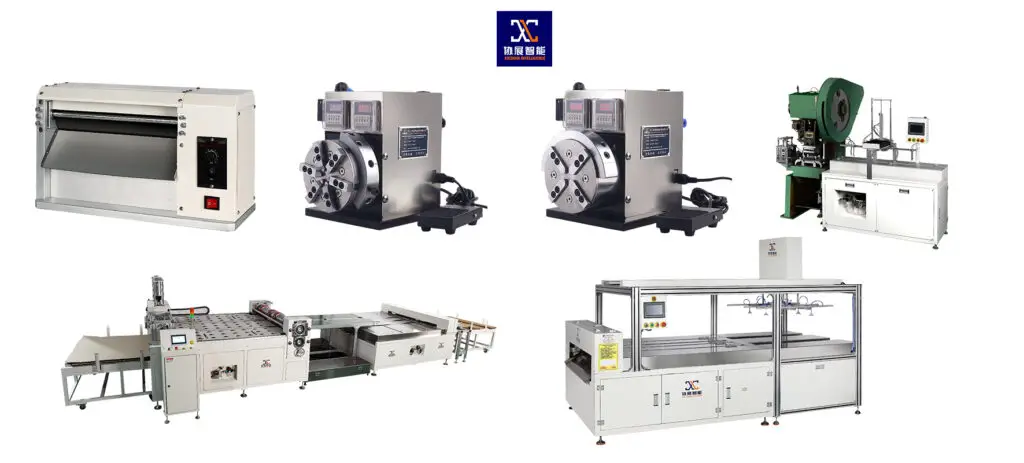
What Experienced Manufacturers Learn From Production Problems
Ask ten heater manufacturers what their biggest production challenge is, and you will likely hear ten different answers. Some point to material quality, others blame labor shortages, while some focus on machine precision. After working with heater factories for years, I have found that most production losses rarely come from one major failure. They usually result from a series of small issues that accumulate throughout the manufacturing process. Understanding these challenges early helps manufacturers reduce waste, improve consistency, and protect profitability.
The factories that achieve the most stable mica heater manufacturing results are not necessarily the ones with the newest equipment. They are usually the factories that identify process weaknesses early and continuously improve workflow consistency.
A Survey Question: What Causes the Most Production Loss in Mica Heater Manufacturing?
During discussions with factory managers, engineers, and procurement teams, several recurring answers appear repeatedly.
- Material inconsistency
- Cutting accuracy issues
- Punching defects
- Assembly variation
- Operator dependency
- Unexpected machine downtime
Interestingly, very few factories suffer from only one of these issues. Most experience multiple challenges simultaneously.
This observation reveals an important reality: mica processing problems are often interconnected rather than isolated.
Challenge #1: Material Variability Before Production Begins
Many production teams focus heavily on equipment selection while paying less attention to incoming material quality.
In practice, material variation remains one of the largest hidden risks in mica heater manufacturing.
Differences in:
- Sheet thickness
- Density
- Moisture content
- Surface flatness
- Lamination quality
can significantly influence downstream operations.
For example, even a small thickness deviation can affect cutting precision, punching performance, and heater assembly alignment.
Many production managers discover that machine adjustments alone cannot solve quality issues when raw material variation exceeds acceptable limits. Stable production starts with stable material.
Why Do Cutting Problems Continue to Affect Production Efficiency?
Cutting appears straightforward, but it remains one of the most influential stages in the production process.
Factories producing mica heaters often rely on precision cutting systems such as the XZ-XB1300 Fully Automatic Mica Board Four Edge Trimming and Cutting Machine or the XZ-JB1212 Fully Automatic Mica Board Cutting Machine.
Both systems are designed to maintain dimensional consistency during continuous production.
However, cutting problems can still occur when:
- Material feeding is unstable
- Tooling becomes worn
- Operator setup varies
- Board quality fluctuates
Once dimensional errors appear, every downstream operation becomes more difficult.
Survey Result: Which Production Stage Creates the Highest Rework Rate?
Based on industry reports covering insulation material manufacturing and heating component production, punching and assembly stages often account for a significant portion of production rework.
Several manufacturing studies indicate that dimensional positioning errors and assembly alignment problems frequently contribute to over 20% of process-related quality corrections in complex component manufacturing environments.
This highlights why precision throughout the entire workflow matters more than focusing on one individual machine.
Challenge #2: Punching Defects and Positioning Errors
Punching operations prepare mica components for assembly, mounting, and electrical integration.
Common punching-related problems include:
- Hole misalignment
- Edge cracking
- Burr formation
- Tool wear
- Feeding inconsistencies
Factories often underestimate how much punching accuracy affects final product quality.
A mounting hole shifted by only a small amount may create assembly stress, increase labor time, or reduce production consistency.
| Production Challenge | Root Cause | Impact on Production | Typical Solution | Expected Benefit |
|---|---|---|---|---|
| Material Variation | Inconsistent Supplier Quality | Higher Defect Rates | Incoming Material Inspection | Improved Stability |
| Cutting Deviation | Tool Wear or Setup Errors | Dimensional Inaccuracy | CNC Control Systems | Better Repeatability |
| Punching Defects | Poor Positioning | Assembly Difficulties | Automated Feeding | Reduced Rework |
| Assembly Variation | Operator Dependency | Quality Inconsistency | Standardized Procedures | Stable Production |
| Machine Downtime | Maintenance Delays | Lost Capacity | Preventive Maintenance | Higher Utilization |
Challenge #3: Assembly Variability During Heater Production
Assembly is where many earlier process weaknesses become visible.
If cutting dimensions vary or punching locations shift, operators must compensate manually during assembly.
This introduces additional variation into:
- Heating wire positioning
- Pressure distribution
- Mechanical fit
- Electrical performance
Factories pursuing export markets usually place significant attention on assembly repeatability because customer expectations continue rising worldwide.
When investigating assembly defects, trace the problem backward through the workflow. The root cause is often found in cutting or punching operations rather than assembly itself.
What Happens When Production Depends Too Much on Operator Experience?
This issue is becoming increasingly common.
Many factories face labor shortages, especially when experienced operators retire or move to other industries.
Processes heavily dependent on individual skill levels often experience:
- Production variation between shifts
- Longer training periods
- Higher error rates
- Reduced scalability
This is one reason automation adoption continues increasing across mica heater manufacturing facilities.
Challenge #4: Equipment Utilization and Downtime
Even high-quality machinery cannot deliver consistent performance without proper maintenance.
In many factories, unplanned downtime originates from:
- Delayed maintenance schedules
- Improper lubrication
- Worn tooling
- Electrical issues
- Operator misuse
Unexpected stoppages create more than lost production time. They also disrupt scheduling, labor planning, and customer delivery commitments.
Measure machine utilization monthly rather than annually. Small recurring downtime issues are easier to correct before they become major production bottlenecks.
How Are Leading Factories Reducing Mica Processing Problems?
The most successful manufacturers rarely rely on a single improvement.
Instead, they build a coordinated system covering:
- Material verification
- Precision cutting
- Stable punching
- Controlled assembly
- Preventive maintenance
Factories implementing this approach often experience stronger consistency and lower overall production costs.
Many manufacturers evaluate complete equipment solutions through:
Mica Sheet & Mica Board Processing Machines
Survey Question: Why Do Buyers Choose Specialized Equipment Manufacturers?
Procurement managers increasingly prioritize industry expertise over catalog specifications.
They want suppliers who understand:
- Material behavior
- Production workflows
- Maintenance requirements
- Future expansion plans
- Process integration challenges
This is one reason many global manufacturers work directly with specialized factories rather than general machinery suppliers.
Understanding the broader mica supply chain can also help buyers evaluate long-term sourcing strategies:
Top 13 Mica Sheet Manufacturers
Real customer projects also provide valuable insights into equipment selection and workflow development:
Before investing in new machinery, identify the largest source of production variation in your factory. Solving the wrong problem often delivers disappointing results regardless of equipment quality.
Final Survey Conclusion
If we summarize the responses from manufacturers, engineers, and production managers, one conclusion stands out clearly.
Most mica processing problems do not originate from a single machine or a single employee. They develop when multiple small weaknesses interact across the production workflow.
The factories that consistently improve profitability are those that examine the entire manufacturing system—from material sourcing and cutting accuracy to punching stability and final assembly control.
If you are evaluating new production equipment or looking for ways to reduce recurring mica heater manufacturing challenges, our engineering team can help analyze your workflow and recommend practical solutions.