
How to Select Mica Processing Equipment for Different Heater Types
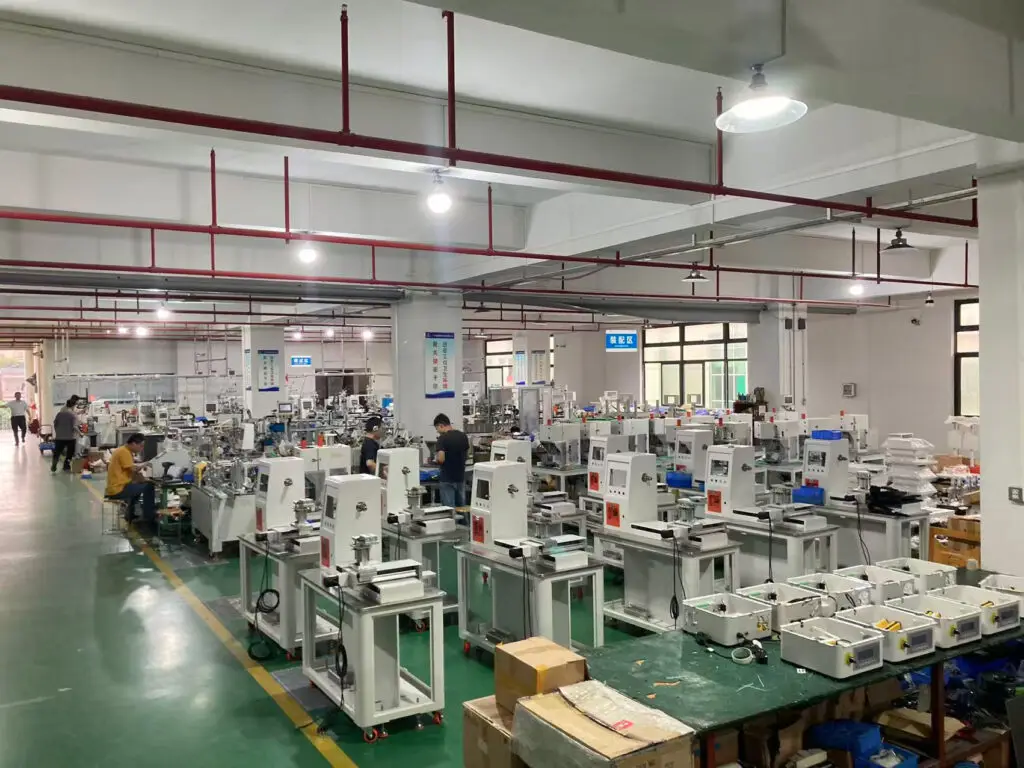
Choosing the Right Processing Solution for Modern Mica Heater Manufacturing
Selecting mica processing equipment for different heater types is not simply a matter of choosing the fastest machine or the highest automation level. The correct decision depends on the heater structure, mica component design, production volume and required dimensional stability. A small mica ring used in a hair dryer heater and a large mica insulation board used in an industrial heating system require completely different processing approaches. The best equipment choice starts by understanding the relationship between the heater design and the manufacturing process behind it.
Why Does Heater Type Determine Mica Processing Equipment Selection?
Many factories begin equipment selection by comparing machine specifications, but experienced production engineers usually start with the heater structure. The reason is that mica components are not universal parts. Their shape, thickness, insulation requirement and assembly method determine how the material should be cut, formed and processed.
The mechanical principle is straightforward. Different heater designs create different stress conditions during manufacturing. Flat mica insulation plates require accurate cutting and edge finishing because dimensional errors affect assembly alignment. Cylindrical mica rolls require controlled molding because excessive pressure can damage the insulation structure. Small stamped mica components require precise feeding and punching because even minor positioning errors may influence electrical insulation performance.
The result is that equipment should be matched to the component manufacturing process rather than purchased based only on production capacity. A machine that performs well for one heater category may become inefficient or unsuitable when applied to another product type.
In heater manufacturing, the highest production efficiency usually comes from reducing process mismatch. Many production problems blamed on machine performance are actually caused by selecting equipment that does not fit the physical characteristics of the mica component being produced.
Which Mica Processing Method Fits Different Heater Structures?
Before selecting equipment, manufacturers should classify their heater products according to the mica component involved. This classification creates a clearer connection between product requirements and machine capability.
| Heater Type | Typical Mica Component | Main Processing Requirement | Suitable Equipment Direction | Production Priority |
|---|---|---|---|---|
| Hair dryer heaters | Round mica rolls and shaped insulation pieces | Rolling and forming accuracy | Mica paper molding equipment | Shape consistency |
| Electric heating plates | Flat mica boards and punched parts | Cutting and stamping precision | Cutting and stamping machines | Dimensional accuracy |
| Industrial heaters | Large mica insulation boards | Large-format processing | Automatic trimming and cutting systems | Stable production output |
Do not select equipment only according to heater output. First identify the mica component shape, thickness range and tolerance requirement. These factors determine the correct processing method much more accurately.
How Do Different Mica Forming Processes Affect Final Heater Quality?
The forming process directly influences the reliability of the final heater because mica parts often work as electrical insulation barriers. Poor dimensional control can create assembly stress, uneven spacing or unnecessary mechanical pressure on heating wires.
For example, the XZ-J730D Mica Paper Molding Machine is designed for mica roll round processing applications such as hair dryer heating components. Its working principle focuses on controlled forming pressure and stable shaping rather than aggressive deformation. This approach helps maintain consistent geometry while protecting the mica structure during molding.
In contrast, flat mica boards require different processing logic. Cutting accuracy, edge quality and feeding stability become more important because these components usually connect with additional assembly steps. Understanding this difference helps manufacturers avoid applying the wrong machine concept to the wrong heater category.
How Should Manufacturers Compare Different Mica Processing Machines?
When manufacturers compare mica processing machines, the biggest mistake is focusing only on automation level or machine capacity. In actual production environments, the better question is whether the machine structure matches the processing characteristics of the heater component. A high-output machine cannot create value if it produces unstable parts, while a properly matched machine can improve efficiency even at a lower production speed.
The reason comes from the relationship between material behavior and machine movement. Mica is a layered mineral material with excellent insulation properties, but its structure requires careful handling during cutting, punching and forming. Excessive force, unstable feeding or inaccurate positioning may affect edge quality and final assembly performance.
For this reason, professional buyers usually compare equipment according to several practical factors: processing accuracy, material compatibility, automation level, changeover flexibility and future expansion capability.
| Machine Model | Main Application | Key Parameters | Suitable Heater Production | Buyer Consideration |
|---|---|---|---|---|
| XZ-J730D Mica Paper Molding Machine | Round mica roll forming |
220VAC, 50Hz, 200W Mica thickness 0.4-1mm Width 10-300mm | Hair dryer heaters and tubular heater insulation parts | Focus on forming consistency and material protection |
| XZ-SL300 Automatic Stamping and Feeding Machine | Mica sheet stamping and feeding |
220VAC, 50Hz, 1800W Board width 30-300mm Storage capacity 100-200pcs | Mass production heating elements | Evaluate feeding stability and production rhythm |
| XZ-JB1212 Fully Automatic Mica Board Cutting Machine | Mica board precision cutting |
380VAC, 50Hz, 3800W 120×120cm board size Thickness 0-3mm Accuracy ±0.2mm | Electric heating plates and insulation boards | Prioritize dimensional stability |
| XZ-XB1300 Four Edge Trimming and Cutting Machine | Large mica board trimming |
380VAC, 50Hz, 5800W 130×130cm board size Thickness 0-6mm Accuracy ±0.2mm | Industrial heating systems | Choose for large-format production requirements |
Should You Choose One Universal Machine or Multiple Specialized Machines?
Many manufacturers hope to purchase one machine that can handle every mica component. This idea appears economical, but it often creates limitations during actual production. The reason is that different heater components require different mechanical actions. Cutting, stamping, feeding and molding are separate processes with different accuracy requirements.
A specialized machine applies force and movement according to the material requirement of each operation. For example, molding equipment focuses on controlled shaping, while cutting equipment focuses on dimensional accuracy and edge quality. When each machine performs the process it was designed for, production stability improves because fewer compromises are required.
In practical manufacturing, a combination of specialized equipment often creates better results than forcing multiple processes into one system. This approach allows factories to expand production capacity step by step while maintaining consistent product quality.
A common pattern in successful heater production lines is that manufacturers separate high-precision operations from high-speed operations. Cutting accuracy, forming quality and feeding stability are controlled independently because each stage affects the final heater performance differently.
When planning equipment investment, reviewing the complete processing route is usually more effective than purchasing individual machines separately. Our Mica Sheet & Mica Board Processing Machines category includes different solutions designed for cutting, stamping, trimming and forming requirements across various mica heater applications.
Before purchasing equipment, map every mica component in your heater product line. Identifying which parts require cutting, molding, punching or feeding will prevent unnecessary investment in unsuitable machines.
How Should Equipment Selection Change for Different Heater Applications?
Different heater products create different demands on mica processing. A supplier producing household appliances usually prioritizes stable output and repeatability, while an industrial heating manufacturer may focus more on large-size processing capability and long-term durability. Therefore, equipment selection should begin with understanding the final application rather than only the mica material itself.
The reason is related to how mica components function inside heaters. Mica parts are not simply insulation materials; they also act as structural supports, positioning elements and heat-resistant barriers. Any dimensional inconsistency can influence wire placement, air gap distribution and final assembly accuracy.
The mechanical result is that different heater categories require different processing priorities. Hair dryer heaters usually require accurate round forming because the mica structure must fit into a compact heating chamber. Electric heating plates require stable cutting and punching because flat mica components must align with heating wires and metal frames. Industrial heaters often need larger processing capacity because the insulation boards are physically bigger and thicker.
| Application Scenario | Main Production Challenge | Recommended Processing Focus | Equipment Direction | Key Purchasing Point |
|---|---|---|---|---|
| Hair Dryer Heating Elements | Compact size and shape consistency | Mica roll forming accuracy | Mica heater processing machine with forming capability | Stable forming pressure |
| Electric Ceramic Heater Plates | Flat insulation alignment | Cutting and stamping precision | Automatic cutting and punching systems | Dimensional repeatability |
| Industrial Heating Equipment | Large insulation components | Large-format processing stability | Automatic mica board processing systems | Machine rigidity and continuous operation |
What Common Equipment Selection Mistakes Should Manufacturers Avoid?
Many purchasing mistakes happen because manufacturers evaluate machines from a single perspective. Some focus only on price, others focus only on automation level. However, the lowest purchase price does not always create the lowest production cost, and the highest automation level does not always create the best manufacturing result.
The reason is that equipment value comes from matching machine capability with production requirements. A machine with unnecessary functions may increase investment and maintenance complexity, while a machine with insufficient capability may create quality issues, production delays and additional modification costs.
A professional selection process normally evaluates three questions:
- Does the machine match the physical characteristics of the mica component?
- Can the equipment maintain stable quality during continuous production?
- Can the supplier support future production changes and technical requirements?
For international buyers, supplier experience is especially important because installation, commissioning and technical communication directly influence production startup. Manufacturers that have worked with different heater applications usually understand potential issues before they appear during operation.
You can review how different manufacturing requirements are transformed into practical equipment solutions through our Client Cooperation projects, where equipment selection is based on actual production conditions rather than standard recommendations.
The best equipment investment is not necessarily the most advanced machine available. It is the machine that removes the biggest production limitation in your factory. Understanding the bottleneck first usually leads to better results than upgrading technology without a clear production objective.
Before finalizing equipment selection, prepare actual heater drawings, mica specifications and expected production volume. This information allows engineers to recommend a machine configuration based on real manufacturing conditions.
How Can You Build a Future-Proof Mica Heater Production Line?
When planning a mica heater production line, manufacturers should not only consider today’s products. A reliable equipment decision should also support future product development, changing customer requirements and increasing production expectations. This is especially important because heater manufacturers often expand their product range after establishing stable production capabilities.
The reason is that heater structures continue to evolve. New applications may require different mica shapes, tighter dimensional control or higher production efficiency. If the original equipment selection leaves no flexibility for additional processing requirements, manufacturers may face another round of investment sooner than expected.
From a mechanical perspective, flexible processing systems allow manufacturers to adjust tooling, parameters and production methods without completely replacing the equipment. Machines designed with practical adjustment capability help factories respond faster when new heater designs enter production.
This is why experienced buyers usually evaluate not only current production output but also future possibilities. A suitable mica element forming machine should provide stable performance for existing products while leaving enough flexibility for process improvement.
The biggest advantage of automation is not simply reducing labor. Its deeper value is creating a repeatable production system where quality depends less on individual operator experience and more on controlled manufacturing processes.
What Is the Best Way to Make the Final Equipment Decision?
The final equipment decision should combine product requirements, production targets and supplier engineering capability. Choosing a machine only from a specification sheet may overlook important factors such as material behavior, tooling requirements and integration with existing production steps.
A professional evaluation process usually follows several practical steps:
- Analyze the heater structure and identify every mica component involved.
- Determine whether the process requires cutting, stamping, molding or feeding.
- Match machine capability with production volume and quality requirements.
- Confirm supplier support for installation, commissioning and future improvements.
This approach reduces purchasing risk because equipment selection becomes based on manufacturing requirements instead of assumptions. In international projects, this method also improves communication between buyers, engineers and equipment suppliers.
Before placing an order, always confirm the complete production process, including material preparation, forming accuracy, downstream assembly and expected future capacity. A machine should support your entire manufacturing workflow, not only one isolated operation.
Why Does Supplier Experience Matter in Mica Processing Projects?
Mica processing equipment is closely connected with the final heater performance, which means supplier experience has a direct influence on project success. A supplier who understands only the machine structure may provide equipment that works technically but does not fully match the customer’s production requirements.
The reason is that successful production depends on many connected details: material selection, tooling design, processing sequence, machine adjustment and operator training. When these factors are considered together, the result is a more stable production process with fewer unexpected problems.
For manufacturers researching mica materials and applications, understanding the relationship between mica suppliers and processing requirements can also support better equipment decisions. Our article about Top 13 Mica Sheet Manufacturers in China provides additional reference when evaluating material sources for industrial heater production.
At Xiezhan Machinery, we focus on helping manufacturers select practical mica processing solutions based on their heater types, production requirements and long-term goals. Whether the application requires cutting, stamping, feeding or forming, our engineering approach starts from understanding the customer’s actual manufacturing process.
If you are planning a new mica heater production line or upgrading existing equipment, you can contact our engineering team through Contact Us for technical discussion. We can evaluate your heater design, mica material and production expectations to recommend a suitable processing solution.
Conclusion: Select Equipment According to the Heater, Not the Machine
The correct mica processing equipment is determined by the relationship between heater design, material characteristics and production requirements. Different heater types require different processing methods, and the most reliable production results come from matching the machine with the actual manufacturing process.
Manual solutions may remain suitable for flexible low-volume production, while automated systems provide stronger advantages when consistency, efficiency and scalability become important. The key decision is not choosing the most advanced technology, but choosing the equipment that creates the most stable production outcome for your factory.