
Mica Processing Solutions for Hair Dryer Heating Elements
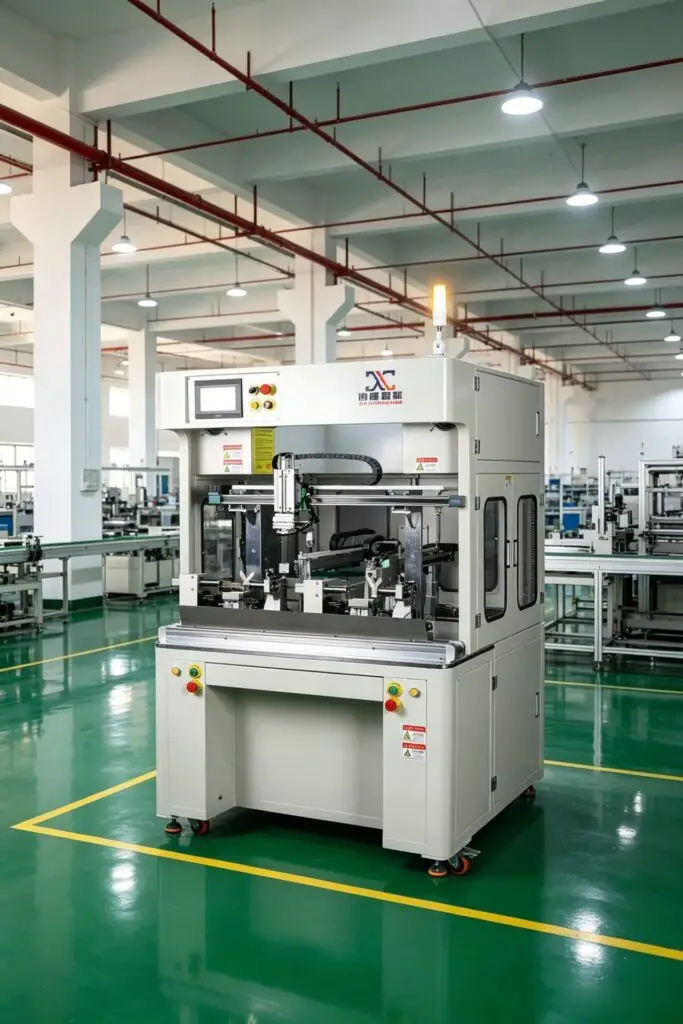
Choosing the Right Mica Processing Line for Consistent Hair Dryer Heating Element Production
If you manufacture hair dryer heating elements, the most important question is not which machine is the fastest—it is whether every mica component leaving the production line is dimensionally consistent. Hair dryers are compact products with limited internal space. Even a small variation in mica size, hole position or forming accuracy can complicate heater assembly, reduce production efficiency and increase warranty risks. From years of working with heating element manufacturers, I have found that the factories achieving the lowest defect rates usually focus on process matching rather than purchasing the highest-capacity machine available.
Hair dryer heating elements are becoming smaller while performance expectations continue to rise. As component tolerances tighten, manufacturers are paying more attention to the consistency of mica processing than to simple production speed. Stable dimensions now contribute more to production efficiency than adding extra operators.
Survey Question 1: Which Processing Step Creates the Highest Risk During Hair Dryer Heater Production?
When discussing production challenges with purchasing managers, the answers are often different. Some believe stamping creates the biggest risk, while others focus on assembly. After reviewing multiple production lines, however, one pattern appears repeatedly: inaccuracies introduced during mica processing usually continue through every downstream operation.
The reason is straightforward. Hair dryer heaters typically contain multiple insulation layers, heating wires and metal brackets assembled within a very compact structure. If the mica sheet dimensions vary, operators must spend additional time adjusting every subsequent component. Mechanical compensation during assembly can never fully recover dimensional errors created earlier.
From a mechanical perspective, precise cutting and forming establish the reference dimensions for the entire heater. CNC-controlled positioning, rigid machine frames and stable feeding mechanisms reduce dimensional variation before assembly even begins. The result is improved product consistency, smoother assembly and fewer rejected heating elements.
Professional Judgment
Many factories initially attempt to improve assembly efficiency by training operators. In practice, improving the consistency of mica components often produces greater productivity gains because every workstation benefits from receiving accurately processed parts.
Survey Question 2: Which Equipment Configuration Fits Different Hair Dryer Production Volumes?
Another common purchasing question is whether one standard machine can satisfy every production requirement. Based on actual manufacturing experience, the answer is rarely yes. Production capacity, product design and automation objectives all influence equipment selection.
For manufacturers producing relatively small batches with frequent product changes, flexibility is usually more valuable than maximum throughput. Companies supplying OEM brands, on the other hand, often prioritize repeatability because consistent dimensions reduce quality variation across thousands of units.
This explains why our customers frequently select different machine combinations rather than relying on one universal solution. For example, the XZ-J730D Mica Paper Molding Machine is designed specifically for processing rolled mica components used in hair dryers. Its compact structure supports mica thicknesses from 0.4–1.0 mm and widths up to 300 mm, making it particularly suitable for continuous production of cylindrical mica insulation parts. When higher cutting accuracy is required for flat insulation pieces, the XZ-JB1212 Automatic Mica Board Cutting Machine becomes a complementary solution thanks to its CNC-controlled positioning and cutting accuracy of approximately ±0.2 mm.
Rather than viewing these machines as competitors, experienced manufacturers usually treat them as different process stations within one coordinated production line.
| Application Scenario | Production Priority | Recommended Equipment | Why It Fits | Expected Result |
|---|---|---|---|---|
| Prototype Development | Frequent Design Changes | XZ-J730D | Fast adjustment for rolled mica parts | Shorter development cycle |
| Medium Batch OEM Production | Stable Precision | XZ-JB1212 | High cutting consistency | Lower assembly variation |
| Large Export Orders | Continuous Production | XZ-SL300 + XZ-JB1212 | Automatic feeding with precision cutting | Higher productivity and lower labor input |
When evaluating different processing routes, many buyers first compare the available machine types before deciding how to configure an entire production line. Our complete
Mica Sheet & Mica Board Processing Machines
collection provides a practical overview of equipment designed for different manufacturing stages, helping engineering teams compare processing capabilities instead of simply comparing machine sizes.
Survey Question 3: Is Higher Automation Always the Best Investment?
This question appears in almost every purchasing discussion, especially from manufacturers preparing to expand production. The assumption is understandable: if automation reduces labor, then buying the highest level of automation should naturally produce the best return. In reality, the relationship is more complicated.
The first factor is production stability. Automation only creates value when upstream and downstream processes operate with similar cycle times. If an automatic feeding system delivers mica sheets faster than the molding or assembly stations can process them, work-in-progress inventory accumulates and operators begin interrupting automatic operation. Instead of improving efficiency, automation simply shifts the production bottleneck.
Mechanically, every automatic feeding system depends on repeatable positioning. Mica sheets are lightweight and relatively brittle. Poor material alignment causes cumulative positioning errors that eventually affect punching, trimming and hole alignment. Servo-controlled feeding combined with rigid positioning mechanisms minimizes these accumulated deviations before cutting even begins.
The result is not simply higher output. It is a production line that remains stable during long operating hours while maintaining dimensional consistency across thousands of parts.
When calculating equipment investment, compare the reduction in manual correction time instead of only comparing machine speed. In many heater factories, fewer adjustments during assembly generate greater long-term savings than increasing cutting capacity alone.
Survey Question 4: Which Quality Indicators Should Purchasing Teams Measure Before Choosing Equipment?
Many RFQs emphasize machine dimensions, installed power and production speed. Surprisingly, these specifications rarely determine the overall quality of finished heating elements. Experienced procurement engineers usually evaluate process capability instead.
The reason is simple. Hair dryer heating elements operate in compact spaces with repeated thermal cycling. Small dimensional differences in mica insulation directly influence heater positioning, resistance wire spacing and airflow distribution. Stable manufacturing therefore begins with repeatable process capability rather than maximum mechanical force.
During equipment evaluations, I normally recommend focusing on five measurable indicators instead of dozens of catalog specifications.
| Quality Indicator | Why It Matters | Mechanical Influence | Production Impact | Priority |
|---|---|---|---|---|
| Cutting Accuracy | Controls dimensional consistency | Servo positioning stability | Higher assembly yield | ★★★★★ |
| Hole Position Accuracy | Maintains heater alignment | Rigid tooling guidance | Reduces manual correction | ★★★★★ |
| Material Feeding Stability | Prevents cumulative deviation | Automatic positioning | Stable long-run production | ★★★★☆ |
| Cycle Repeatability | Supports automation | Consistent servo control | Balanced production flow | ★★★★☆ |
| Machine Rigidity | Maintains long-term precision | Frame stability | Lower maintenance cost | ★★★★☆ |
One observation worth mentioning is that manufacturers with the lowest field failure rates rarely inspect only finished heaters. They monitor dimensional consistency immediately after each mica processing operation. Detecting variation early prevents defects from accumulating throughout the production line, reducing waste while improving delivery reliability.
Survey Question 5: What Can You Learn From Successful Heater Manufacturers?
Many successful heater manufacturers share another characteristic beyond purchasing quality equipment—they continuously refine the relationship between material, tooling and machine capability. Rather than replacing machines whenever production increases, they optimize each process stage first.
Reviewing different manufacturing approaches can provide useful benchmarks before investing in new equipment. Our
Top 13 Mica Sheet Manufacturers
resource highlights how experienced suppliers approach material consistency, processing capability and long-term production planning. Comparing supplier capabilities often reveals opportunities to improve equipment selection before expanding factory capacity.
The highest-performing production lines usually do not rely on a single premium machine. Their competitive advantage comes from matching every processing station to the characteristics of the heating element being manufactured, allowing each machine to operate within its most stable working range.
Survey Question 6: How Should You Plan Future Expansion Without Replacing Your Entire Production Line?
One question that frequently comes from factory owners is whether today’s equipment will still meet production needs three or five years from now. This is a practical concern because demand for small household appliance heating elements often changes much faster than machine depreciation.
From my experience, the best investment is not necessarily the machine with the largest capacity. It is the production line that allows additional process stations to be integrated without interrupting existing production. Modular planning reduces future capital expenditure while keeping production risks under control.
The reason lies in how heater manufacturing evolves. Production usually expands in stages rather than overnight. As customer orders increase, manufacturers often add automatic feeding, precision cutting, inspection or assembly stations one by one. Machines designed with standardized interfaces and stable positioning systems are much easier to integrate into future automation projects.
Mechanically, this approach maintains synchronization between each process. As additional equipment is introduced, material flow remains balanced instead of creating bottlenecks. The final result is higher overall equipment efficiency, better production scheduling and a lower cost per finished heating element.
When requesting quotations, ask suppliers not only about today’s machine specifications but also how easily additional feeding systems, inspection units or automation modules can be connected in the future. Expansion capability often creates more long-term value than purchasing maximum capacity on day one.
Survey Summary: Which Production Strategy Delivers the Best Long-Term Return?
Throughout this survey-style discussion, one conclusion becomes increasingly clear. Stable hair dryer heating element production depends less on purchasing individual high-performance machines and more on matching each processing stage to the characteristics of the product being manufactured.
Factories achieving consistent quality generally follow the same decision sequence:
- Evaluate heater structure before selecting equipment.
- Choose processing accuracy before considering production speed.
- Balance automation with realistic production capacity.
- Measure process stability instead of relying only on machine specifications.
- Plan future production expansion from the beginning of the project.
This purchasing logic reduces unexpected downtime, minimizes material waste and creates a production line that continues delivering consistent quality even as customer demand grows.
Another observation from long-term cooperation with heater manufacturers is that successful factories rarely evaluate equipment in isolation. They compare supplier engineering capability, application experience and after-sales support together because machine performance ultimately depends on how well the entire production solution fits the manufacturing process.
Why Manufacturers Continue Working With Xiezhan
At Xiezhan, we do more than manufacture individual mica processing machines. We help customers evaluate complete production workflows, identify process bottlenecks and recommend equipment combinations based on actual heater structures, production targets and future expansion plans.
Our experience covers equipment for mica cutting, molding, feeding and board processing used across hair dryers, fan heaters, electric heaters and other heating element applications. Instead of recommending one standard configuration, we focus on selecting machines that operate reliably together throughout the entire production process.
Many of these solutions can be seen in real manufacturing projects featured on our
Client Cooperation
page, where different production requirements have been matched with practical equipment configurations.
If you are planning a new production line or upgrading an existing one, our engineering team can evaluate your heater drawings, production targets and factory layout before recommending a suitable equipment combination. You are welcome to
contact us
to discuss your manufacturing requirements with our technical specialists.