
Mica Insulation Processing for Household Appliances
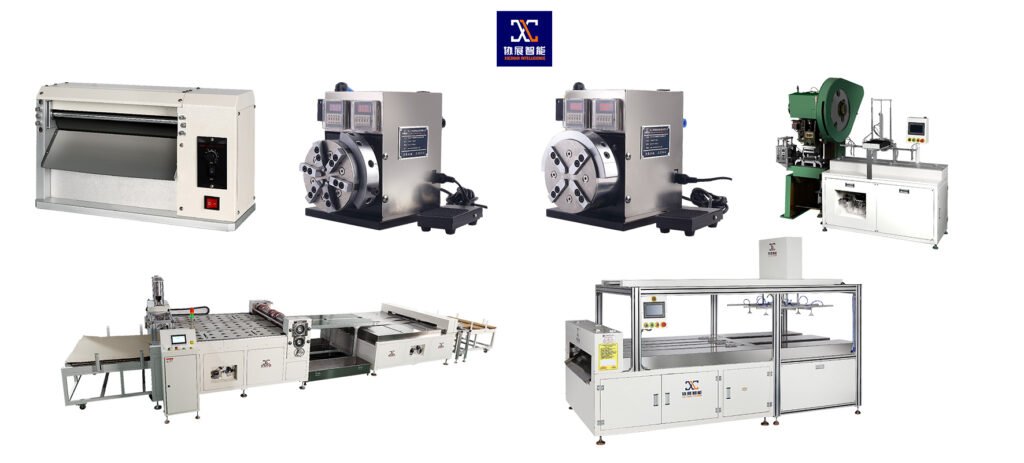
Choosing the Right Mica Processing Method for Appliance Insulation Components
For household appliance manufacturers, the right mica insulation processing method depends on three factors: product design, production volume and required electrical safety performance. The best solution is not always the fastest machine or the lowest investment. It is the processing method that can maintain stable insulation quality throughout long-term production.
In appliances such as hair dryers, ovens, heating devices, electric kettles and other thermal products, mica components work as a protective barrier between heating elements and surrounding structures. Small differences in mica dimensions or forming accuracy can influence assembly efficiency, heat distribution and product reliability.
Why does mica insulation quality matter in household appliance manufacturing?
The reason mica insulation quality matters is that household appliances often operate with frequent heating and cooling cycles. Unlike simple structural materials, mica components must maintain electrical insulation while also resisting thermal stress.
The mechanical principle is related to dimensional stability. When mica sheets are accurately cut, shaped and positioned, the heating element remains at the designed location. This maintains a predictable insulation distance and reduces unnecessary stress between components.
When processing accuracy decreases, problems usually appear during assembly. Operators may need additional adjustment, components may fit unevenly and the final appliance may experience inconsistent heating performance.
A machine producing more parts per hour does not necessarily create better production results if operators spend additional time correcting dimensional variation.
How should manufacturers compare different mica insulation processing methods?
The main difference between processing methods is not only automation level. The real difference is how accurately the process controls material movement, cutting force and final component dimensions.
The reason is that mica is a layered mineral material. Excessive mechanical stress, unstable feeding or inaccurate positioning can influence edge quality and component strength.
The mechanical solution is selecting equipment based on the actual appliance application. Small heating components may require fine forming accuracy, while larger insulation boards may require stronger cutting capacity.
| Processing Solution | Equipment Characteristics | Suitable Appliance Application | Main Advantage | Potential Limitation |
|---|---|---|---|---|
| Manual Mica Processing | Flexible operation with human adjustment | Prototype and low-volume appliance production | Low initial investment | Higher variation between parts |
| Semi-Automatic Processing | Machine-assisted cutting and forming | Medium-volume appliance manufacturing | Balance between flexibility and efficiency | Operator skill still affects output |
| Automatic Mica Processing | Controlled feeding, cutting and forming | Large-scale appliance production | High repeatability | Requires proper production planning |
From an equipment selection perspective, manufacturers should avoid choosing machines only according to current output. Appliance markets change quickly, and a production line designed only for today’s products may become limited when new heater models appear.
Which mica processing equipment characteristics influence production reliability?
The reliability of mica insulation manufacturing depends on several machine functions working together rather than one single specification.
The reason is that insulation components go through multiple processing stages. Cutting accuracy, material feeding stability and forming consistency all affect the final component quality.
The mechanical relationship is simple: when each processing step maintains controlled parameters, the finished mica component becomes easier to assemble and more predictable during appliance operation.
For manufacturers expanding their insulation component production capability, reviewing complete mica sheet and mica board processing machines helps compare different equipment structures and production methods.
How can manufacturers select mica processing equipment based on appliance production needs?
The correct equipment selection starts from the final appliance requirement, not from the machine catalogue. Many purchasing teams compare cutting speed and machine price first, but experienced manufacturers usually evaluate the relationship between component accuracy, production stability and future product changes.
The reason is that household appliances contain different heating structures. A mica insulation component used inside a hair dryer has different requirements from a mica support part used in an industrial-style heating appliance. The mechanical principle is that each component shape requires different control over cutting, punching and forming processes.
The result is that selecting equipment according to application requirements reduces unnecessary investment while preventing production bottlenecks after market expansion.
| Appliance Type | Mica Component Requirement | Recommended Processing Method | Key Quality Control Point | Production Consideration |
|---|---|---|---|---|
| Hair Dryer Heating Element | Small mica rolls, insulation supports and precise shaped parts | Automatic feeding and precision forming equipment | Shape consistency and edge quality | High repeatability for mass production |
| Electric Oven Heating System | Larger mica insulation boards and support plates | Mica board cutting and trimming systems | Dimensional accuracy and flatness | Stable material utilization |
| Electric Kettle Heater | Compact insulation pieces with consistent thickness | Precision punching and forming equipment | Hole position and component fitting | Reduced assembly adjustment |
| Industrial Heating Products | Large mica insulation structures | Heavy-duty mica processing solutions | Mechanical strength and thermal resistance | Long-term production stability |
A mismatch between mica processing capacity and assembly capacity often creates hidden costs. Excess components increase inventory, while insufficient supply interrupts the entire production flow.
What production planning factors should be considered before purchasing mica insulation equipment?
Before investing in equipment, manufacturers should calculate production requirements from the finished appliance demand instead of only estimating the number of mica parts needed.
The reason is that one appliance model may require several mica components with different shapes and sizes. The mechanical principle behind efficient production planning is balancing machine capacity, material availability and assembly demand.
The result is a production system that avoids both machine idle time and unexpected material shortages.
| Monthly Appliance Output | Mica Component Demand | Recommended Equipment Level | Production Focus | Purchasing Advice |
|---|---|---|---|---|
| Small batch production | Limited customized components | Flexible semi-automatic equipment | Quick changeover | Prioritize versatility |
| Medium volume production | Regular component demand | Automatic cutting and forming systems | Balance efficiency and flexibility | Consider future expansion |
| Large scale manufacturing | Continuous high-volume demand | Integrated automated processing line | Maximum stability | Evaluate automation compatibility |
Advice: When evaluating mica insulation equipment, procurement managers should request sample processing tests whenever possible. Real material testing reveals cutting quality, forming stability and actual production suitability better than machine specifications alone.
A practical equipment evaluation should also include supplier experience with different mica applications. Reviewing industry cases and previous cooperation projects can help manufacturers understand whether the equipment design matches their production challenges. More details about our manufacturing experience can be found through our client cooperation projects.
How does precision mica processing improve electrical insulation reliability?
For household appliance manufacturers, insulation reliability is not determined only by mica material selection. The processing accuracy of each mica component directly influences how effectively the insulation system performs during long-term operation.
The reason is that mica insulation works by maintaining a stable electrical barrier and thermal separation. If the component size changes because of inaccurate cutting, poor forming or inconsistent feeding, the designed insulation distance may be reduced.
The mechanical principle is that precision processing keeps the mica component geometry within a controlled range. Accurate dimensions allow heating elements, support structures and insulation layers to maintain their intended positions.
The result is fewer assembly adjustments, more stable heating performance and improved reliability of finished household appliances.
Quality factors that influence mica insulation performance
- Dimensional accuracy: Consistent mica component size reduces installation variation during appliance assembly.
- Edge processing quality: Smooth and accurate edges reduce assembly interference and material damage.
- Material handling stability: Controlled feeding prevents unnecessary deformation of mica sheets.
- Process repeatability: Stable machine operation helps maintain the same quality level during mass production.
Industry Statistics: According to industrial manufacturing studies on automated production systems, reducing manual handling variation is one of the main factors improving consistency in high-volume component manufacturing. For insulation components, this means stable processing control becomes increasingly important as production volume increases.
Why are automated mica processing solutions becoming more important for appliance manufacturers?
The shift toward automated mica processing is driven by changes in appliance manufacturing requirements. Customers expect higher product reliability, shorter delivery cycles and consistent quality across large production volumes.
The reason is that household appliance manufacturers are moving from small customized production toward more standardized and scalable manufacturing models. Manual processing depends heavily on operator experience, while automated systems transfer important process parameters into machine control.
The mechanical principle is that automation controls repeated actions such as feeding, cutting, positioning and forming. Once these parameters are stabilized, production variation decreases.
The result is a more predictable manufacturing process with lower labor dependency and easier production management.
How should manufacturers evaluate a mica processing machine supplier?
Choosing a supplier should not only focus on equipment specifications. For insulation-related production, technical support capability and application understanding are equally important.
The reason is that mica processing involves many practical factors, including material characteristics, component design, production environment and operator requirements. A supplier who understands only machine structure may not provide the best production solution.
The mechanical connection is that successful equipment implementation requires matching machine capability with the customer’s actual manufacturing process.
The result is a production system that works reliably after installation instead of requiring continuous adjustment.
| Supplier Evaluation Factor | Basic Supplier | Experienced Equipment Partner | Impact on Production | Procurement Recommendation |
|---|---|---|---|---|
| Machine Design | Provides standard equipment | Adjusts solutions according to application | Better production matching | Review technical details carefully |
| Material Experience | Focuses on machine operation | Understands mica processing characteristics | Lower trial-and-error cost | Check previous applications |
| After-Sales Support | Basic installation support | Provides technical guidance during production | Faster production stabilization | Evaluate long-term cooperation ability |
Manufacturers researching mica materials and processing methods often compare suppliers from different regions. A practical approach is to understand both material sources and processing technologies. Our reference guide on mica sheet manufacturers in China provides additional background for companies evaluating supply chains.
What is the practical approach for building a reliable mica insulation production system?
A reliable production system is created by combining suitable equipment, correct process planning and continuous technical improvement.
The reason is that mica insulation components are not independent parts. They are connected with heating elements, assembly processes and final appliance performance.
The mechanical principle is that every stage, from raw mica sheet handling to final component forming, influences the next manufacturing step.
The result is that manufacturers who treat mica processing as a complete production system usually achieve better stability than those who only purchase individual machines.
Precision processing creates predictable manufacturing. For insulation components, predictable manufacturing creates safer and more competitive appliances.
At Xiezhan Machinery, we focus on providing practical mica processing solutions based on real manufacturing requirements, including equipment selection, production application analysis and technical support. If you are planning to improve your mica insulation production capability, you can discuss your application requirements through our contact page.
Final Thoughts
Selecting mica insulation processing equipment is not simply a machine purchasing decision. It is a production strategy decision that affects quality consistency, labor efficiency and future manufacturing flexibility.
The best solution comes from understanding the relationship between mica material behavior, appliance design requirements and processing technology. When these three factors are matched correctly, manufacturers can achieve stable insulation performance and efficient production growth.