
Why Heating Element Geometry Impacts Machine Design
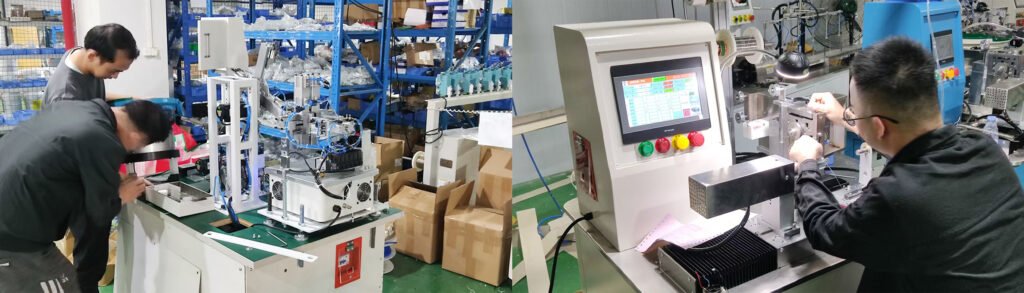
When procurement teams evaluate a new heating element production line, they often focus on output per hour, automation level, or price per set. The real risk, however, lies elsewhere: if the geometry of your heating element is not fully understood at the design stage, no winding machine—no matter how advanced—will perform consistently. Coil diameter, pitch variation, bending radius, and terminal orientation directly reshape machine structure, tooling configuration, and motion control logic. In long-term production, geometry dictates stability more than brand name or motor power.
The First Misconception: “A Heating Element Is Just a Coil”
In many early discussions with buyers across Europe, Southeast Asia, and North America, I hear the same assumption: “We are only winding resistance wire.” But a heating element is rarely just a simple coil. It may be helical, planar spiral, serpentine, or multi-layered with varying pitch density.
Geometry Defines Mechanical Stress
A tight-radius spiral creates different tension dynamics compared to a wide industrial heater coil. The smaller the bending radius, the higher the mechanical stress concentration. This directly impacts spindle torque requirements and mandrel rigidity in a winding machine.
Pitch Variation Alters Motion Programming
Variable pitch heating elements—common in hair dryer heaters and industrial hot air systems—require synchronized axial feed and rotation control. In such cases, the geometry dictates servo coordination precision, not the other way around.
Breaking the Belief: “Machine Design Can Compensate for Any Shape”
Some suppliers claim their universal winding system can handle “all geometries.” In practice, this approach often leads to excessive adjustment time and reduced stability.
Tooling Cannot Ignore Physical Limits
Mandrel diameter must match inner coil geometry precisely. Even a 0.5 mm deviation in tight elements can lead to spring-back variation and dimensional drift.
Gravity and Structural Orientation Matter
Horizontal vs vertical machine structures respond differently to complex geometry. Heavy industrial heater coils may perform better on horizontal layouts due to load distribution, while compact spiral geometries may benefit from vertical gravity alignment.
Geometry and Tension Control: A Hidden Cost Factor
Uniform Geometry = Stable Tension Window
Standard cylindrical coils allow predictable tension ranges. Bearing wear remains controlled, and motor load remains steady.
Complex Geometry = Dynamic Tension Adjustment
When geometry changes within a single product, tension must be actively managed. This requires closed-loop control systems and higher-grade servo components.
| Geometry Type | Machine Impact | Long-Term Risk |
|---|---|---|
| Uniform Helical | Stable torque demand | Low mechanical fatigue |
| Variable Pitch | Dynamic servo coordination | Increased control complexity |
| Flat Spiral | Custom mandrel & tooling | Tool wear concentration |
Why Some Production Lines Fail After 18–24 Months
From field observation, premature machine instability often traces back to underestimating geometric stress factors. Bearings experience uneven load. Tool holders develop micro-deformation. Operators compensate manually, increasing inconsistency.
Geometry-driven stress is cumulative. It does not appear in the first quarter—it surfaces after thousands of production cycles.
The Link Between Heating Element Shape and Automation Strategy
Simple Geometry = Easier Robotic Integration
Uniform cylindrical coils integrate smoothly with conveyor-fed automation.
Irregular Geometry = Custom Handling Required
Flat or asymmetric heaters require adaptive gripping systems. This affects cycle time more than most buyers anticipate.
How Mature Procurement Teams Evaluate Geometry Impact
- Analyze minimum bending radius vs wire material elasticity
- Confirm terminal orientation requirements
- Evaluate spring-back tolerance range
- Assess tooling replacement cycle frequency
At Xiezhancn, as a specialized winding machine manufacturer and factory, our client cooperation process begins with geometry review before machine configuration discussion.
Comparing Market Approaches
Generic Machine Suppliers
Often provide standardized platforms with adjustable fixtures. Suitable for simple coil shapes but limited when geometry becomes complex.
Geometry-Driven Manufacturers
As a focused winding machine manufacturer, we design structural rigidity and motion architecture around the element geometry itself.
Case Reflection From Industrial Heating Sector
A Middle Eastern industrial heater producer once shifted from uniform cylindrical coils to segmented pitch heaters. Their previous generic system required constant manual adjustment. After redesigning spindle stiffness and feed synchronization based on geometry analysis, scrap rate reduced by approximately 18% within the first production year.
FAQ
1. Can your machines meet international certification requirements?
Our equipment complies with relevant CE and electrical safety standards required by major export markets. Detailed documentation is provided during project confirmation.
2. Do you support custom geometry-based machine development?
Yes. Geometry-specific tooling and structural reinforcement are part of our engineering approach. Each project begins with element sample analysis.
3. What is the typical lead time?
Depending on complexity, delivery usually ranges between 45–75 days. Complex geometry-driven customization may extend slightly due to tooling precision requirements.
Why Experienced Buyers Choose Specialized Factories
Experienced engineering managers understand that geometry determines machine lifespan. Choosing a dedicated winding machine factory rather than a general automation supplier reduces long-term unpredictability.
You can review our engineering background on our About Us page.
Final Industry Perspective
Heating element geometry is not a secondary detail—it is the blueprint for machine architecture. Ignoring it results in mechanical fatigue, unstable output, and hidden maintenance costs.
If you are evaluating new production investment or redesigning an existing line, discussing geometry parameters early prevents costly redesign later. Our team is available for direct technical consultation via our contact us page.
For reference, our full winding machine portfolio illustrates how different geometries translate into distinct structural solutions.