
Choosing the Right Automation Level for Heating Element Winding
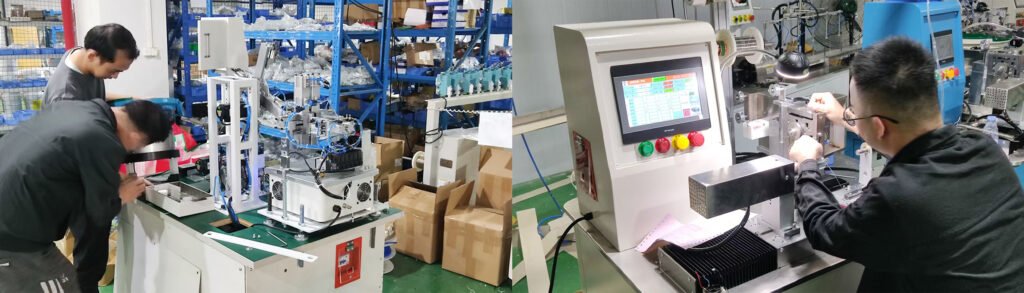
One of the most practical questions procurement managers face is this: how much automation is truly necessary for heating element winding? The answer depends on production volume, labor structure, product diversity, and long-term expansion plans. Over-investing in automation increases financial pressure, while under-investing leads to bottlenecks and unstable quality. Choosing the right automation level requires balancing technical capability with realistic factory conditions.
Why Automation Level Should Be Decided After Technical Parameters
Automation decisions must follow raw material definition, coil geometry requirements, and control system selection. Without this sequence, configuration may become inefficient.
Structure First, Automation Second
A stable mechanical and control foundation is required before adding automated functions.
Automation Does Not Automatically Mean Stability
Poorly integrated automation may increase downtime rather than improve productivity.
1. Single Spindle vs Multi-Spindle Systems
Single Spindle Machines
- Lower initial investment
- Simpler maintenance
- Suitable for diverse small-batch production
Multi-Spindle Machines (2, 4 or More)
- Higher output per cycle
- Improved labor efficiency
- Increased mechanical and synchronization complexity
| Configuration | Best For | Consideration |
|---|---|---|
| Single Spindle | Flexible production | Lower throughput |
| Multi-Spindle | High-volume production | Higher maintenance skill required |
Factories producing standardized heating elements in large quantities often benefit from multi-spindle setups. However, custom-oriented manufacturers may prefer flexibility.
2. Automatic Cutting Systems
Automatic cutting improves cycle time and reduces manual error.
Advantages
- Consistent cutting length
- Reduced operator fatigue
- Improved production rhythm
Points to Confirm
- Blade material durability
- Cutting force stability
- Compatibility with resistance-based cutting modules
3. Automatic Discharging Mechanisms
Auto discharging removes finished coils from mandrels without manual intervention.
When It Is Necessary
- Long coils with higher removal difficulty
- High daily production volume
- Limited labor availability
When Manual Removal Is Acceptable
- Short coils
- Low to medium output
- Flexible production scheduling
In some cases, simple manual removal may offer greater operational control.
4. Integrated Spot Welding Options
Certain heating element designs require welding the coil to lead rods immediately after winding.
Benefits of Integration
- Reduced handling steps
- Better positional accuracy
- Improved process consistency
Complexity Consideration
Welding modules increase electrical and control system complexity. Maintenance capability must match system sophistication.
5. Utility Requirements and Factory Infrastructure
Automation level affects power consumption and compressed air demand.
- Voltage compatibility (110V / 220V / 380V)
- Stable compressed air supply (0.5–0.7MPa)
- Available installation space
Before confirming automation modules, verify factory utility stability.
Cost Perspective: Initial Investment vs Long-Term Efficiency
From a financial standpoint, automation must be evaluated through production volume and labor cost comparison.
In regions with rising labor costs, automated discharge and multi-spindle systems may reach break-even faster. In labor-stable environments, simpler configurations may remain economically sound.
Future Outlook: Automation Will Become More Modular
Industry direction is moving toward modular automation. Factories increasingly prefer scalable systems that allow upgrades rather than fully fixed configurations.
Selecting a machine with expandable architecture reduces future replacement risk.
Structured Decision-Making Approach
Before deciding on automation level, review the complete configuration framework in our Complete Winding Machine Specification Guide.
At Xiezhan, as a professional winding machine manufacturer and factory, automation modules are configured based on actual production data rather than standardized packages.
Final Advice for Procurement Managers
Define annual output clearly. Calculate labor structure realistically. Assess maintenance capability honestly. Choose automation that supports sustainable growth instead of short-term visual impact.
Automation should strengthen stability and efficiency, not introduce unnecessary operational burden.