
Automatic Heater Coil Winding Machine for High-Volume Production
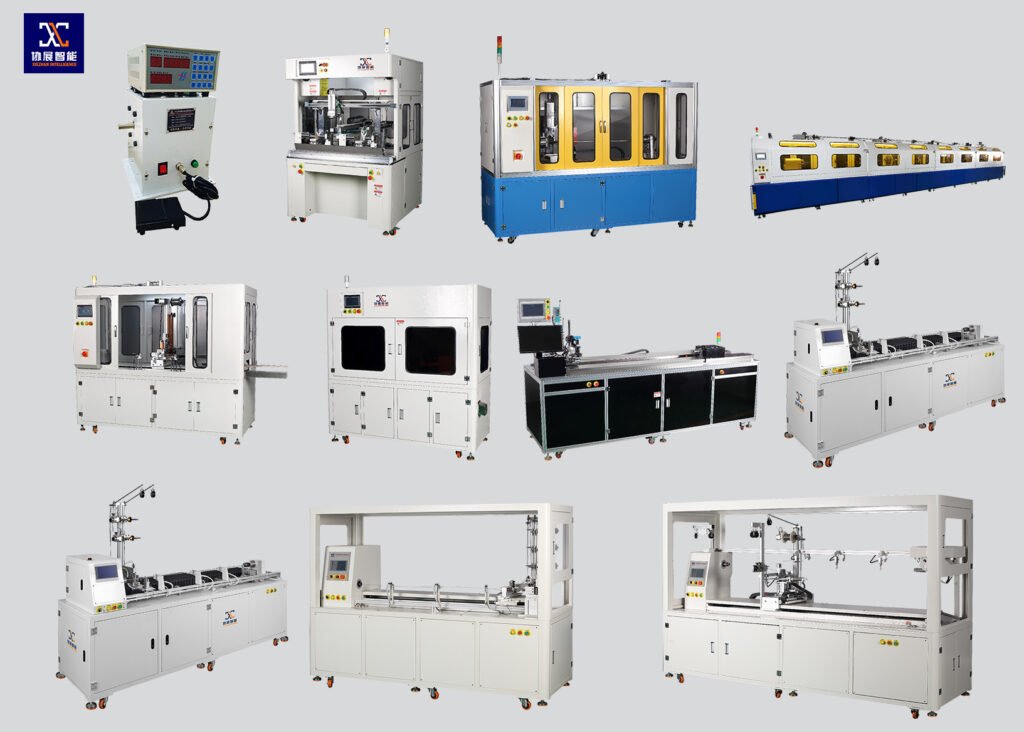
For high-volume production, the key question is not whether you need an automatic heater coil winding machine, but whether that machine can maintain consistent output over long production cycles. Many systems perform well in short tests but fail to sustain precision when running continuously. In large-scale heating element manufacturing, automation must go beyond speed—it must control material behavior, ensure repeatability, and integrate smoothly with upstream and downstream processes.
Why Do High-Volume Lines Require Fully Automatic Winding?
As production scales up, manual or semi-automatic systems introduce variability that becomes difficult to control.
Typical issues include:
- Operator-dependent tension variation
- Inconsistent coil pitch across batches
- Frequent machine adjustments
- Production interruptions due to fatigue or error
In appliance manufacturing sectors such as hair dryers and electric heaters, even small inconsistencies affect final product reliability. Industry data suggests that manual handling can increase variability by over 20% compared to automated systems.
What Makes an Automatic Winding Machine Suitable for High-Volume Production?
Not all automated machines are built for sustained industrial use. The difference lies in how the system maintains stability under continuous load.
1. Closed-Loop Tension Control
Automatic systems must continuously adjust tension as wire conditions change. Without real-time feedback, wire stretching and resistance deviation become unavoidable.
2. Precision Motion Synchronization
The coordination between spindle rotation and guide movement determines coil geometry. At high speeds, even slight timing errors lead to pitch inconsistency.
3. Structural Stability
High-volume production amplifies mechanical stress. Machines with insufficient rigidity develop vibration issues over time, affecting both product quality and maintenance cycles.
4. Integration Capability
In heating element production, winding does not operate independently. It must align with mica processing and assembly stages.
Where Do Automatic Systems Deliver the Most Value?
The real benefit of automation becomes clear when production volume reaches a certain threshold.
| Factor | Semi-Automatic | Fully Automatic | Production Impact |
|---|---|---|---|
| Output Stability | Operator-dependent | Consistent | Reduced variation |
| Labor Requirement | High | Low | Cost control |
| Defect Rate | Higher | Lower | Quality improvement |
| Scalability | Limited | High | Capacity growth |
Why Do Some Automatic Machines Still Underperform?
Automation alone does not guarantee performance. Many systems fail because they are designed for general applications rather than heating element production.
Common limitations include:
- Inadequate tension control for thin resistance wire
- Lack of adaptation to different coil structures
- No synchronization with downstream processes
These issues often appear after continuous operation, when small inconsistencies accumulate into larger defects.
How Do Experienced Buyers Evaluate Automatic Systems?
From practical experience working with global appliance manufacturers, evaluation criteria usually focus on:
- Consistency over long production runs
- Resistance deviation across batches
- Ease of adapting to different product designs
- Maintenance frequency under continuous use
According to manufacturing studies, improving process stability can reduce total production cost by 8–12% in high-volume environments.
Regional Differences in Automation Expectations
Different markets approach automation with different priorities:
- Europe: focus on precision and integration
- India: balance between cost and automation level
- Southeast Asia: flexibility for multiple product types
Despite these differences, the underlying requirement remains consistent—stable and repeatable output.
What Defines a Reliable Manufacturer for High-Volume Equipment?
At Guangdong Xiezhan, machine development is aligned with actual production environments rather than isolated testing conditions.
As a specialized manufacturer and factory, the focus is on:
- Material-specific winding control systems
- Robust mechanical structure for long-term operation
- Integration with mica processing and assembly stages
- Adaptability to different heating element designs
These factors are reflected in real-world applications documented in client cooperation, where stable production performance is critical.
How to Decide If You Need Full Automation
Full automation is not always necessary. The decision depends on production scale and consistency requirements.
You should consider a fully automatic system if:
- Your production volume is continuously increasing
- Manual variability is affecting quality
- Labor costs are rising
- You require consistent output across large batches
For broader market understanding, you may also review heater coil winding machine manufacturers.
Final Perspective for Industrial Decision Makers
An automatic heater coil winding machine is not simply about replacing manual labor—it is about building a stable production system capable of sustaining quality at scale.
For manufacturers focused on long-term growth, the priority should be consistency, integration, and adaptability rather than short-term output gains.
If you are planning to scale your heating element production, you can discuss your requirements directly through the contact page.