
How Heating Element Assembly Machines Improve Industrial Heater Production
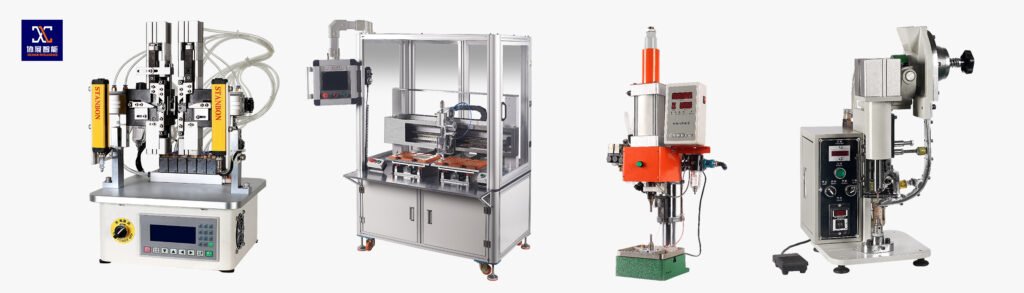
Building More Stable Industrial Heater Production with Automated Assembly Solutions
For industrial heater manufacturers, the decision to introduce a heating element assembly machine usually comes down to one question: can automation improve production stability enough to justify the investment? In most factories, the answer depends less on machine speed and more on whether the equipment can reduce manual variation during repetitive assembly processes. When heating elements require consistent riveting, looping, and wire positioning, automated assembly equipment helps manufacturers achieve more reliable quality, lower labor dependency, and better production control.
The reason is simple: heating element assembly is often a precision-sensitive process. A small difference in copper wire positioning, riveting pressure, or loop shape may affect electrical connection reliability and final heater performance. The mechanical principle behind assembly automation is controlling repeated movements through fixed positioning, controlled pressure, and standardized operating cycles. The result is a production process that is easier to manage when order volume increases or product specifications become more demanding.
Why Do Industrial Heater Manufacturers Need Assembly Automation?
Many manufacturers initially believe that manual assembly is sufficient because heating elements are relatively small components. However, this view changes when production volume increases. The real challenge is not assembling one component correctly; it is maintaining the same quality level across thousands or millions of repeated operations.
The reason production inconsistency appears is that manual assembly depends heavily on operator experience. Even skilled workers may create differences in riveting force, wire positioning, and component alignment after long working periods. The mechanical principle of automated assembly equipment is to replace human-dependent repetition with controlled mechanical actions. A machine repeats the same movement path, pressure level, and timing cycle, which reduces variation between different production batches.
For heating element manufacturers, the result is improved process stability. Fewer defective components need rework, production planning becomes more predictable, and engineering teams spend less time solving repetitive assembly problems.
In heater manufacturing, the biggest benefit of automation is usually not higher speed. The more valuable improvement is reducing quality fluctuations caused by repetitive manual operations. Stable production often creates more commercial value than maximum output capacity.
What Production Problems Can a Heating Element Assembly Machine Solve?
Before selecting equipment, procurement teams should first identify which production problems they want to solve. Different factories may have different bottlenecks, and the correct machine depends on the actual assembly process.
The reason is that heating element production contains several small but critical steps. These include heating rope positioning, copper wire riveting, looping forming, terminal connection, and component inspection. If one step becomes unstable, the entire production process can experience delays or quality problems.
The mechanical advantage of assembly equipment is that each operation can be separated and controlled. For example, a copper wire riveting machine focuses on connection consistency, while a looping machine focuses on forming accuracy. Combining the right equipment with the production requirement creates a more balanced manufacturing system.
| Production Challenge | Possible Cause | Machine Solution | Production Result | Suitable Application |
|---|---|---|---|---|
| Unstable riveting quality | Manual pressure differences | Controlled riveting mechanism | More consistent electrical connections | Heating rope and wire connection production |
| Different loop shapes between products | Operator skill variation | Fixed forming path and positioning | Improved component consistency | Heating coil and rope forming applications |
| High labor requirement | Large repetitive assembly workload | Semi-automatic or automatic assembly process | Lower dependence on manual operation | Medium and high-volume production |
According to industry manufacturing reports, automation adoption in manufacturing continues to increase as companies face higher labor costs and stricter quality requirements. For heating component manufacturers, this trend is especially relevant because assembly accuracy directly influences final product reliability.
Do not select assembly equipment only by comparing output speed. First evaluate your current production loss: rejected components, repeated adjustments, operator training time, and inconsistent assembly quality. These hidden costs often determine whether automation creates real value.
Which Heating Element Assembly Processes Can Be Automated?
For most industrial heater manufacturers, automation does not mean replacing the entire production line at once. A more practical approach is improving the most repetitive and quality-sensitive processes first.
The reason is that some assembly operations require more human judgment, while others depend mainly on repeatable mechanical movements. Processes such as copper wire riveting and heating rope looping are ideal automation targets because their movement patterns are highly repetitive.
The mechanical principle is based on dedicated tooling and controlled operation cycles. When the fixture, feeding system, and riveting mechanism work together, the machine can maintain stable positioning during continuous production. The result is a smoother workflow with fewer interruptions.
For manufacturers evaluating complete equipment options, our Heating Element & Assembly Machines category includes solutions designed for different heating component assembly requirements, from semi-automatic riveting to looping and related processing applications.
Which Heating Element Assembly Processes Benefit Most from Automation?
Not every heating element production process requires the same level of automation. A common mistake during equipment selection is assuming that higher automation always means better production performance. In reality, the right automation level depends on where production variation occurs and which process affects final product reliability.
The reason is that heating component manufacturing contains different stages, including wire preparation, terminal connection, riveting, looping, and assembly positioning. Each stage creates different production challenges. The mechanical principle is that automation equipment improves efficiency by controlling repeated movements with stable mechanical positioning and consistent operating force.
The result is that manufacturers can achieve better production consistency when automation is applied to the process with the highest quality impact.
| Production Process | Common Production Challenge | Automation Method | Expected Manufacturing Improvement | Suitable Equipment Type |
|---|---|---|---|---|
| Copper wire riveting | Uneven riveting pressure and unstable connection | Controlled riveting force and fixed positioning | More consistent electrical connection quality | XZ-GJ006 Semi-Automatic Heating Rope Copper Wire Riveting Machine |
| Heating rope looping | Manual operation creates size differences | Mechanical looping control with repeatable movement | Stable component shape and production speed | XZ-SM800 Heating Rope Copper Wire Riveting and Looping Machine |
| Heating component assembly | High dependence on skilled operators | Semi-automatic assembly workflow | Reduced labor variation and easier training | Heating element production tools |
Industry Insight: Experienced manufacturers usually automate the process that creates the highest rejection rate first, rather than replacing the entire production line immediately. This approach reduces investment risk while improving the most critical production bottleneck.
How Should Manufacturers Choose Between Semi-Automatic and Fully Automated Assembly Equipment?
When manufacturers compare assembly equipment, the key question is not simply “semi-automatic or automatic?” The more important question is whether the production volume and product variation justify a higher automation level.
The reason is that heating element products often have different specifications depending on application requirements. A factory producing multiple heater models may need flexibility, while a high-volume standardized production line may prioritize maximum efficiency.
The mechanical principle is that semi-automatic equipment keeps certain manual adjustment functions while automating repetitive precision operations. Fully automated systems integrate more production steps but usually require higher initial investment and more stable product specifications.
The result is that many medium-volume manufacturers achieve better return by selecting semi-automatic solutions that improve critical processes without reducing production flexibility.
| Production Situation | Recommended Equipment Direction | Reason | Production Result |
|---|---|---|---|
| Small to medium production volume | Semi-automatic assembly equipment | Maintains flexibility while improving repeated operations | Balanced investment and productivity |
| Growing customer demand | Modular automation upgrade | Allows production expansion without replacing all equipment | Lower expansion cost |
| Large standardized orders | High-volume assembly equipment | Maximum efficiency through process standardization | Higher output capability |
Before upgrading production equipment, calculate not only labor savings but also quality improvement, production stability, and future capacity requirements. A machine that fits today’s production but limits tomorrow’s growth may not be the most economical choice.
What Production Problems Can XZ-GJ006 and XZ-SM800 Help Solve?
For heating rope manufacturers, two important challenges usually appear during production: unstable copper wire connection and inconsistent looping formation.
The reason is that heating rope components require accurate mechanical handling. Small differences in riveting position or loop shape can influence assembly efficiency and downstream production stability. The mechanical principle of XZ-GJ006 and XZ-SM800 is to combine controlled feeding, positioning, and mechanical processing to improve repeatability.
The result is a more stable heating component assembly process suitable for manufacturers who need reliable output without immediately investing in a complete automated production line.
How Do XZ-GJ006 and XZ-SM800 Improve Heating Element Assembly Efficiency?
For manufacturers producing heating ropes and electrical heating components, the biggest production challenge is often not cutting production time alone. The more important challenge is maintaining stable assembly quality when order volume increases.
The reason is that heating element assembly involves repeated operations such as copper wire connection, riveting, and loop forming. When these steps depend heavily on manual operation, small differences in operator strength, positioning accuracy, and working rhythm can create quality fluctuations.
The mechanical principle of semi-automatic assembly equipment is to standardize the most critical movements while keeping enough flexibility for different product specifications. By controlling positioning, riveting force, and forming accuracy, the equipment reduces variation between individual products.
The result is a more stable production process with improved consistency, easier operator training, and better control over manufacturing output.
| Machine Model | Main Function | Suitable Production Process | Main Manufacturing Benefit | Recommended Application |
|---|---|---|---|---|
| XZ-GJ006 Semi-Automatic Heating Rope Copper Wire Riveting Machine | Copper wire riveting for heating rope components | Heating rope terminal connection process | Improves riveting consistency and reduces manual operation variation | Manufacturers requiring stable heating element connection quality |
| XZ-SM800 Semi-Automatic Heating Rope Copper Wire Riveting and Looping Machine | Integrated riveting and looping operation | Heating rope forming and assembly preparation | Combines multiple operations into one controlled workflow | Factories needing higher efficiency with flexible production |
INSIGHT: In many factories, the first automation investment should target the process where quality problems appear repeatedly, not necessarily the process with the highest labor cost. A stable connection process can prevent downstream failures and reduce inspection pressure.
What Quality Factors Should Buyers Evaluate Before Purchasing Assembly Equipment?
When purchasing heating element assembly equipment, buyers should evaluate more than machine speed. A machine that produces quickly but creates unstable connections may increase hidden production costs.
The reason is that heating components operate under electrical and thermal conditions where connection reliability directly affects final product performance. The mechanical principle is that precise assembly force and positioning control influence the physical contact between components.
The result is that quality evaluation should focus on process stability rather than only output quantity.
| Quality Evaluation Point | Why It Matters | Equipment Influence | Expected Production Result |
|---|---|---|---|
| Riveting consistency | Connection quality depends on stable mechanical pressure | Controlled riveting operation | Reduced defective products |
| Position accuracy | Incorrect positioning affects assembly reliability | Fixed mechanical alignment | More uniform components |
| Operator adaptability | Production should not depend on one experienced worker | Simplified operating procedure | Easier workforce management |
During equipment evaluation, ask the supplier about actual production applications, adjustment methods, and after-installation support. The best machine choice depends on how well the equipment matches your manufacturing process.
How Can Manufacturers Build a More Reliable Heating Element Production Line?
A reliable heating element production line is not created by adding automation equipment randomly. It requires matching each process step with the right level of mechanical support.
The reason is that different production stages have different priorities. Some processes require flexibility, while others require repeatability. The mechanical principle is to automate precision-sensitive operations while maintaining practical production control.
The result is a balanced manufacturing system where production efficiency and product quality improve together.
For companies reviewing complete solutions, Guangdong Xiezhan provides heating element production equipment designed around real manufacturing requirements. Our Heating Element & Assembly Machines category includes equipment for different assembly processes, helping manufacturers select suitable solutions based on product structure and production goals.
Through cooperation with global customers, we focus not only on equipment delivery but also on understanding production challenges before recommending suitable configurations. More information about our cooperation approach is available through our client cooperation page.
Why Should Manufacturers Consider Supplier Experience When Purchasing Assembly Equipment?
Selecting a heating element assembly machine is not only an equipment decision. It is a production stability decision. Many factories focus on machine specifications during purchasing, but the actual performance after installation depends on whether the supplier understands the manufacturing process behind the equipment.
The reason is that heating component assembly involves the interaction between materials, tooling, operator workflow, and final product requirements. A machine may operate correctly in a factory environment, but without proper process understanding, small adjustments in tooling position, riveting pressure, or feeding method may affect production results. The mechanical principle is that industrial equipment must be integrated into the manufacturing process, not simply placed beside the production line.
The result is that experienced suppliers can provide more practical solutions, including machine selection, production adjustment, and process improvement suggestions.
Before purchasing assembly equipment, ask the supplier how they evaluate your production process. A supplier who only provides machine specifications may solve today’s equipment requirement, while a manufacturing partner helps solve long-term production challenges.
At Guangdong Xiezhan, our approach is based on understanding the customer’s actual application. For heating element manufacturers, the same machine may produce different results depending on wire type, heating rope structure, component size, and production target.
This is why we focus on providing suitable equipment combinations rather than recommending unnecessary automation. Our cooperation experience with international customers covers different heating component applications, allowing us to support production planning, equipment selection, and technical communication.
More details about our cooperation approach and manufacturing support can be found through our client cooperation information.
How Can Heating Element Assembly Equipment Support Future Production Expansion?
A common purchasing mistake is selecting equipment only according to current production demand. Manufacturing conditions change. Customer orders increase, product designs become more diversified, and quality requirements become stricter.
The reason is that heating component production is closely connected with market demand from household appliances, industrial heaters, and electrical equipment industries. The mechanical principle behind scalable production is creating equipment systems that can maintain stable operation when production volume increases.
The result is a production line that can expand without replacing all existing equipment.
- Start with the critical process: Automate the operation where manual variation affects product quality most.
- Keep production flexibility: Choose equipment that can adapt to different component specifications.
- Consider future capacity: Evaluate whether the machine structure can support higher output requirements.
For manufacturers planning an electric heater assembly line, the goal is not simply replacing workers with machines. The real objective is building a more predictable manufacturing process where quality, output, and operating costs can be controlled together.
What Makes Heating Element Assembly Machines a Practical Investment?
The investment value of automation depends on whether the equipment improves the complete production process.
The reason is that heating element production contains many repeated operations. When these operations remain manual, factories must continuously manage operator training, production variation, and quality inspection pressure. The mechanical principle of assembly equipment is to standardize repeated movements through mechanical control systems.
The result is improved production repeatability, reduced dependency on individual operators, and stronger delivery capability for customers.
| Investment Consideration | Traditional Manual Process | Automated Assembly Process | Long-Term Effect |
|---|---|---|---|
| Labor management | High operator dependency | Standardized operation | More stable production planning |
| Quality consistency | Affected by human factors | Controlled mechanical process | Lower quality fluctuation |
| Production expansion | Requires additional labor | Higher process efficiency | Easier capacity growth |
For manufacturers looking for industrial assembly solutions, the correct equipment choice depends on matching machine capability with production requirements. The purpose of automation is not complexity. It is creating a simpler, more controllable manufacturing process.
How Can Guangdong Xiezhan Support Heating Component Manufacturers?
Industrial equipment purchasing requires more than a machine supplier. Manufacturers need a partner who understands production challenges and can provide practical technical communication.
Guangdong Xiezhan focuses on heating element production equipment, including heating rope riveting, looping, and assembly-related machinery. Our experience helps customers evaluate suitable solutions according to production volume, component structure, and manufacturing goals.
From semi-automatic equipment upgrades to complete production planning discussions, we work with customers to find a balance between investment cost and manufacturing performance.
More information about our company background and manufacturing capability is available through our About Us page.
If you are evaluating a new heating element assembly process, our engineering team can discuss your current production requirements and recommend suitable equipment configurations. You can contact us through our Contact Us page.
The best assembly machine is not always the most automated one. It is the machine that removes the biggest production limitation while fitting the factory’s actual process. For heating element manufacturers, stable assembly quality is often the foundation for reliable final products.