
Supporting OEM Clients with Stable Equipment
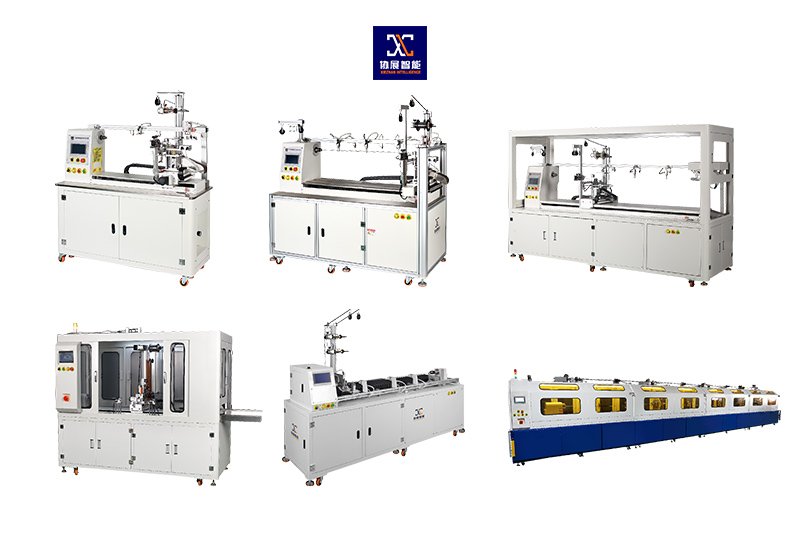
How Reliable Equipment Partnerships Help OEM Factories Scale Production
OEM manufacturers rarely judge equipment by appearance alone. What matters inside a real production environment is whether the machine can run continuously, maintain stable product consistency, support changing customer specifications, and reduce unexpected downtime during large-volume orders. For factories producing heating elements, appliance components, or industrial coil products, equipment stability directly affects delivery schedules, customer trust, and long-term profitability.
Many factories discover this only after experiencing unstable production. A machine may perform well during testing but begin creating resistance variation, coil inconsistency, or excessive maintenance interruptions after months of continuous operation. That is why mature OEM buyers increasingly focus on long-term equipment support instead of simply comparing purchase prices.
OEM factories usually lose more money from unstable production interruptions than from the initial equipment investment itself. Stable output becomes part of the factory’s reputation.
Why OEM Factories Prioritize Stability Over Maximum Speed
In many procurement discussions, buyers initially ask about production speed. After deeper technical conversations, however, the focus often changes toward stability.
The reason is simple.
OEM production environments are rarely stable for long periods. Factories must constantly manage:
- multiple customer specifications,
- tight shipment deadlines,
- different voltage requirements,
- small-batch orders,
- and continuous production scheduling pressure.
Under these conditions, unstable equipment quickly creates operational problems.
Production Delays Affect More Than One Order
When a winding machine unexpectedly stops during OEM production, the problem spreads across the factory:
- assembly scheduling becomes delayed,
- quality inspection timelines shift,
- customer delivery dates become risky,
- and labor costs increase.
For export-oriented factories, shipment delays can also damage future cooperation opportunities.
That is why experienced buyers increasingly prefer manufacturers with stable equipment systems and responsive technical support.
Stable Equipment Simplifies Quality Management
Machines with stable tension control and repeatable positioning allow OEM factories to maintain:
- consistent resistance values,
- uniform coil geometry,
- stable thermal performance,
- and lower rejection rates.
This becomes especially important for heating products shipped to Europe, North America, and other markets with stricter quality expectations.
When evaluating equipment suppliers, ask for long-term production references instead of only sample demonstrations. Stable performance after months of operation matters far more than short-term testing speed.
How OEM Factories Select the Right Equipment Partner
Most experienced OEM buyers no longer purchase standalone machines without evaluating the supplier’s technical understanding.
They usually compare:
- industry specialization,
- production experience,
- customization capability,
- after-sales support speed,
- and future cooperation potential.
Why Industry Knowledge Matters
A supplier specializing in heating element winding equipment understands practical production details that general automation suppliers often overlook.
For example, resistance wire behavior changes significantly depending on:
- wire diameter,
- coil pitch spacing,
- material hardness,
- heating structure design,
- and voltage requirements.
Machines such as the XZ-T2201 Fully Automatic Dual Head Drive Five Axis CNC Spring Heating Wire Winding Machine are often selected by OEM factories because they support programmable production control while maintaining stable winding consistency during continuous operation.
This level of stability is difficult to achieve with generic winding solutions.
Why OEM Buyers Prefer Programmable Equipment
OEM production schedules change frequently. Machines capable of storing multiple winding programs reduce setup errors, simplify operator training, and improve switching efficiency between customer orders.
Flexible Production Capability Is Becoming Essential
Modern OEM production rarely focuses on one product only.
Factories increasingly need equipment capable of handling:
- different resistance wire types,
- multiple coil diameters,
- varied heating structures,
- and customized customer specifications.
Machines such as the XZ-T2103 Fully Automatic Spring Shaped Heating Wire Winding Machine and XZ-T2154 Semi-Automatic Spring Heating Wire Winding Machine are often used because they balance flexibility with stable operation.
What Problems Usually Appear with Unstable Equipment?
Factories sometimes underestimate how quickly small equipment instability can affect overall production performance.
In OEM manufacturing environments, even minor winding inconsistency may eventually create:
- customer complaints,
- assembly mismatch,
- unstable heating output,
- or premature product failure.
Hidden Production Losses Often Go Unnoticed
Many production losses are not immediately visible inside accounting reports.
For example:
- operators spend extra time correcting coil positioning,
- quality teams perform additional inspections,
- maintenance interruptions slow production flow,
- and managers spend more time handling production exceptions.
Over time, these hidden costs become larger than the initial equipment price difference between low-cost machines and stable industrial-grade systems.
OEM factories should calculate equipment value based on long-term production consistency and labor efficiency instead of only comparing purchase quotations.
Why Assembly Integration Matters
Stable OEM production does not depend only on winding quality.
Assembly stages also affect final product consistency.
That is why many factories integrate supporting equipment such as:
- XZ-Q113 Single Head Looping Folding Machine,
- XZ-SM800 Semi-Automatic Heating Rope Copper Wire Riveting and Looping Machine,
- and XZ-GJ006 Semi-Automatic Heating Rope Copper Wire Riveting Machine.
Integrated workflow reduces manual handling variation while improving overall production efficiency.
| OEM Requirement | Common Factory Problem | Preferred Equipment Feature | Suitable Equipment Example | Production Benefit |
|---|---|---|---|---|
| Continuous production | Unexpected downtime | Stable mechanical structure | XZ-T2201 | Lower interruption risk |
| Flexible order switching | Long setup time | Programmable recipes | XZ-T2103 | Faster changeover |
| Consistent heating quality | Resistance variation | Stable tension control | XZ-B450P | Lower rejection rate |
| Assembly stability | Manual inconsistency | Integrated workflow | XZ-SM800 | Improved consistency |
| Long-term scalability | Limited future expansion | Modular configuration | XZ-C1040P | Supports future growth |
Why OEM Factories Value Long-Term Technical Support
Equipment purchasing is not a one-time transaction for OEM factories.
Production requirements evolve continuously as customer specifications change.
That is why many buyers prefer suppliers capable of supporting:
- future product upgrades,
- new tooling requirements,
- process adjustments,
- remote troubleshooting,
- and spare parts support.
Factories planning export growth especially value suppliers that respond quickly during technical issues.
What Mature Buyers Usually Avoid
Experienced OEM buyers rarely choose suppliers that only focus on selling equipment quickly without understanding actual production challenges inside the factory.
How Real Cooperation Improves OEM Production Stability
The strongest equipment partnerships usually develop through practical cooperation instead of standard catalog discussions.
OEM factories often require:
- sample analysis,
- process recommendations,
- customized winding structures,
- tooling adjustments,
- and production workflow suggestions.
This is especially common for factories manufacturing:
- heating elements,
- hot air gun components,
- mica heating systems,
- industrial coils,
- and customized appliance heating assemblies.
Real customer cooperation examples can be reviewed here: client cooperation
Why Many OEM Buyers Research Chinese Equipment Manufacturers Carefully
China remains one of the world’s largest production centers for winding equipment and heating element machinery.
However, experienced buyers understand that technical capability varies significantly between suppliers.
Professional procurement teams often compare:
- machine stability,
- factory specialization,
- actual export experience,
- engineering capability,
- and long-term support reliability.
A useful reference for understanding the current supplier landscape can be reviewed here: Top 10 CNC Wire Winding Machine Manufacturers in China
Before selecting a winding equipment supplier, evaluate whether the manufacturer truly understands OEM production logic, not just machine assembly.
Final Thoughts from an OEM Production Perspective
Stable equipment plays a much larger role in OEM manufacturing than many factories initially expect.
Reliable winding systems help manufacturers:
- maintain product consistency,
- reduce production interruptions,
- improve customer confidence,
- support flexible order management,
- and expand export business more safely.
In actual factory operations, equipment stability becomes part of the OEM supplier’s reputation.
That is why experienced buyers increasingly choose specialized manufacturers capable of supporting long-term production development instead of simply supplying standalone machines.
If you want to understand the manufacturing background and technical experience behind these winding solutions, you can learn more here: about us
And if your factory is currently evaluating stable winding equipment for OEM production, you can discuss your project directly here: contact us